

INSTAGRAM AUTHOR DANIEL BELLINO ZWICKE
.



The DUDE Makes a “CAUCASIAN”
White Russian Cocktail
The Dude Abides! Yes he most certainly does. I first saw the seminal movie The Big Lebowski, (Crime Comedy)I think it was somewhere around the year 2000. I know this because the movie was released in 1998, and I was working as a manager at Da Silvano restaurant at the time, and my co-worker Alessandro and I used to quote lines from the movie. We booth loved, as we also loved Boogie Nights, and I remember Alessandro quoting lines, like “Don’t bother me. My wife is in the driveway with an Ass up her Dick, and you’re giving me shit about the lighting.”
Anyway, I can’t remember the exact time watching it, but I do remember there was a video store that sold new VHS Movies pretty cheap. Like $5.99 and $6.99 for a lot of good movies, and I really built up my movie library frm that place, whatever its name was, I can’t remember. Anyway, along with Casablanca, The Godfather, several 007 Bond films, Fargo (Coen Brothers), and other movies, I bought a VHS copy of the Coen Brothers “Big Lebowski,” at that video store on 6th Avenue that day. I took the movie home and watched it that night, “I Loved it,” it was brilliant, and since that first viewing, I’ve probably watched The Big Lebowski starring Jeff Bridges as The Dude, at least 80 times in the past 19 years or so. I can never get enough of the Dude, Walter (John Goodman), Donny (Steve Buscemi), and Maude (Julianne Moore). and the greatest cult movie of all-time The Big Lebowski. The movie is fun, lighthearted and entertaining, and Jeff Bridges in the lead roll turns in a brilliant performance. I recently came across a video clip of Julianne Moore stating in an interview, saying something like, “I’m stunned as to why Jeff Bridges was nominated for an Oscar. His performance was amazing.”
Anyway, I just love the film and the characters, and all the little happenings in it, and great music too. Not an ounce of Shitty Ass Rap Hip Hop so-called music. To me, its just awful noise, and ever chance I get, I’ve just got to knock it and put it down for the Shitty Ass Crap that it is. Basta!
Anyway, back to the good music of the Big Lebowski. The movie begins with a mystic figure of the Cowboy Stranger, played brilliantly by Sam Elliot narrating (not seen) and stating he’s going to tell a story about a guy named The Dude who lives in Los Angelas as the song “Tumbling Tumbleweed” plays in the background, and we see a panormic shot of the city of Los Angelos, then a closer shot of a actual Tumbleweed rolling in the wind down the streets of LA.
Yes there’s music by the obscure Sons of Pioneers (Tumbling Tumbleweed), Bob Dylans “The Man in Me,” the Eagles who we find out that The Dude hates, and most of all the Dude favorite band Creedence Clearwater Revival, who the Dude just loves and listens to constantly. We hear Creedence music throughout the movie. One of the most memorable scenes is when Dude is happy driving in his car (favorite pastime), smoking a joint and listening to Creedence’s “Out My Back Door.” The Dude ends up dropping his joint into his pants, which starts burning his crotch, the Dude bangs on his crotch to put the little fire out, and proceeds to crash his car into a telephone pole.
The Dude ends up in all other kind of mishaps and hi-jinx. H to is favorite pastimes as the Dude states Maude one day that he likes; Bowling, smoking weed, driving around, and “A Little of This & a Little of That.” Doesn’t everyone?
Yes, I’ve watched the Big Lebowski many times, it makes me happy, I just laugh and laugh. I love the characters, the things the say (like Fuck 225 times), and their outlook on life. Walter likes Beer, bowling, and being a Hard Ass, and his all-time # 1 favorite thing is to tell Donny to “Shut The Fuck Up!” Donny, what does Donny do? Well, Donny likes Bowling too, and is more or less along for the ride and have Walter (John Goodman) yell at him, “Shut The FUCK Up Donny!!!”
Maude, she’s into art, hanging with her Gay Friend Knox Harrington, “the Video Artist,” and going to the Biennale (Art Festival) in Venice. That’s Venice, Italy, not California where the Dude lives.
The there’s “The Jesus” played by John Tarturro. Jesus is a rival bowl of Mexican ancestry who Walter claims is a pedophile., but he “Can Fucking Roll,” as Dude says, meaning that he’s a really good bowler.
The actual Big Lebowski is played by actor David Huddleston. He’s a rich guy living in Pasadena and is married to a much younger “Trophy Wife” named Bunny, who just so happens to be a Porn Star actress, starring in a Pron Film Logjammin, that Maude screens for the Dude one day.
The whole them of the movie is that Bunny owes money to her Pornographer Producer boss Jackie Treehorn (Ben Gazzara) who wants his money back. Treehorn sends a couple of dumb goons to Bunny’s husband Jeff Lebowski to get his money back. Only problem is the dummies go to the wrong Lebowski House, they go the Dudes house in Venice Beach. The Dude’s real name is Jeff Lebowski as well, and this turns out to be a case of mistaken identity. This is how the Dude ends up mixed into a lot of stuff, like the faked Kidnapping of Bunny Lebowski (Tara Reid) being held for ransome, which in the end turns out that Bunny’s Husband Jeff Lebowski who is Maude’s father is trying to extrot 1 Million Dollars from a fund that his family has set up for under-Privileged children in the city of Los Angelos.
Well, what about the food you want to know? Well food comes up in the famous scene when the Dude, Donny, & Walter end up at an In-N-Out Burger ( recipe ) one night after thinking that a high school kid named Larry has their briefcase full of money (supposed).
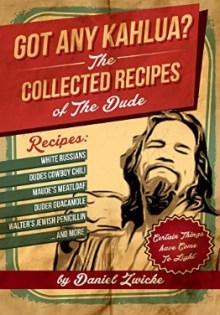
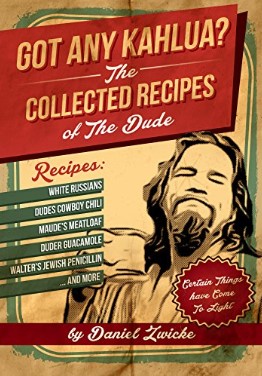
The movie the Big Lebowski has an enormous cult following of millions, many of whom like to call themselves achievers, named after the children who receive funding for their education from the Big Lebowski’s “Urban Achievers Foundation.” Many have wondered if the Dude is a vegetarian or not and what he likes to eat, which we never see him eating any food on the movie. In the scene where they go to In-N-Out Burger on Camrose, and we see Donny and Walter eating In-N-Out Burgers in The Dudes car, but we never see Dude eating one. Why? Some have speculated the Dude is a vegetarian. He’s not. Dude loves burgers too. He loves Guacamole, Burritos, Tacos and Maude’s Meatloaf, as well as Walter’s “Jewish Penicillin.” And it’s all in the cookbook “Got Any Kahlua?” The Collected Recipes of The Dude, aka The Big Lebowski Cookbook written by me.
Got Any Kahlua is a satirical look at the movie the Big Lebowski, and it’s an actual cookbook with lots of great recipes that we (I, “The Royal We”) think the Dude would like to eat, like; Eggs for Breakfast, Tunafish, Cowboy Chili, Steak, Burgers, Guacamole, Tacos, Burritos, and of course Maude’s Meatloaf. And yes, there’s a recipe and instructions for The Dude’s favorite beverage, a “Caucasian,” aka White Russian Cocktail which has become a trademark of the Dude and that movie called The Big Lebowski. And no Big Lebowski Themed Cocktail or Bowling Party would be complete without them.
So, loving the Big Lebowski, and food, and being a writer of cookbooks, and a chef, I one day got thee idea to put them all together, and so GOT ANY KAHLUA aka The Big Lebowski Cookbook was conceive, written, and executed by little ol me, Daniel Zwicke.
GET YOUR COPY of GOT ANY KAHLUA ?
aka
The BIG LEBOWSKI COOKBOOK
ABIDE in IT !
The BIG LEBOWSKI is a CRIME / COMEDY Movie written, produced and Directed by the COEN BROTHERS in 1998
Starring ; JEFF BRIDGES as The DUDE
John Goodman as Walter
Steve Buscemi as Donny
John Tarturro as “The Jesus”
Julianne Moore as Maude Lebowski
Davide Huddleson as The Big Lebowski
Philip Seymour Hoffman as “Brandt”
.

GOT ANY KAHLUA “
aka The BIG LEBOWSKI COOKBOOK
Daniel Zwicke
.
.

Sleeping Peasants
Pablo Picasso
1919
Sleeping Peasants, 1919, is the most potent of the small erotic paintings that is brilliantly colored. The restless, irregular rhythms mapped out by the contours of the tume scene limbs and rumpled drapery amount to a graph of love-making which has just occurred, while the woman’s thrown-back head and uncovered breast confirm her Maenadic ancestry. The ripe bodies nestled in the ripe crops implying some archaic fertility rite.
The painting is carefully planned and controlled, and in that sense an Apolline work of art, and makes its share of erudite allusions to the classical tradition: to the Antique (the pedimental sculptures of the Parthenon), the Renaissance (the massive, straining figures of Michelangelo) and modernist classicism (the late Arcadian scenes of Cezanne).

Women Running
PABLO PICASSO
1922
Yes, “Sleeping Peasants” painted in Paris 1919 by Pablo Picasso is my favorite of all Picasso paintings. I came upon it one day at the MOMA, The Museum of Modern Art in New York. I was at the MOMA one night, walking around looking at paintings when I came upon this masterpiece by the great Spanish Artist Pablo Picasso. I came upon this wonderful little painting and was immediately enamored with it, “I fell in love in an instant.” Look at it, it’s absolutely gorgeous the way the great artist conceived and executed it. The painting is so wonderful, I just love it. Though it’s not one of Picasso’s greater works, and one most people wouldn’t be familiar with, to me it’s priceless. And I couldn’t believe my good fortune when I was given a gorgeous copy of this painting, painted by New York artist Wayne Enstrude. It now hangs in my living room and I love just as much as the original by Pablo Picasso. My friend Wayne captured it perfectly, so Lucky Me.
Also picture above, is Picasso ‘s “Running Women” another Picasso painting that I love so much, that I once painted a copy of it myself. When I was moving from New York’s East Village to Greenwich Village, for lack of space (and Money) I sold it. Sorry I did, and I wish I still had it. Another painting I copied by Picasso was Picasso’s portrait of Gertrude Stein, of which, when Picasso finished painting it and Stein saw it, she remarked, “that doesn’t look like me.” Picasso replied, “it will,” meaning one day Gertrude Stein would look like the portrait that Picasso painted of her. And so it did.

My copy of PICASSO ‘S “The DOVES”
Painted by Me
.

The DOVES
The Original by PICASSO
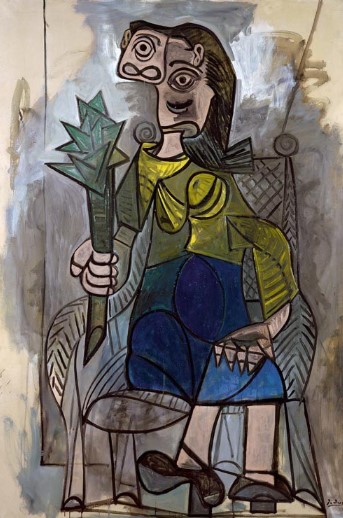
Picasso
“Woman with Artichoke”
RECIPE LUCIA’S STUFFED ARTICHOKE
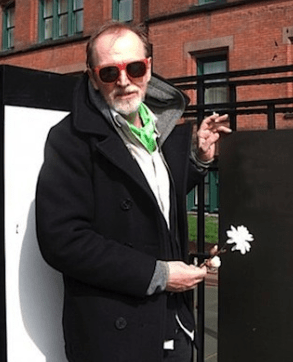
Rene Ricard
Poet / Artist
(1946 – 2014)
Rene Ricard (1946 – 2014) was an American poet and painter who achieved status in the art world dating back to his involvement with Andy Warhol, appearing in several of his films such as “Kitchen” (1965) and “Chelsea Girls” (1966). Well known for his influential essays in Artforum, Ricard held a major role in helping to establish the careers of Keith Haring and Jean-Michel Basquiat. Ricard published four volumes of poems: René Ricard 1979–1980; God With Revolver (1990), which included his visual representations of the poems; Trusty Sarcophagus Co (1990); and Love Poems (1999), which collected his verse alongside drawings by Robert Hawkins. Ricard’s paintings have been exhibited at Petersburg Gallery, Cheim & Read, Half Gallery (New York), Vito Schnabel Presents (New York & Los Angeles), and the 2011 Brucennial. His work is in the permanent collections of the British Museum and the Museum of Modern Art (New York), as well as the private collections of Brice and Helen Marden, Francesco Clemente, and Andy Spade.
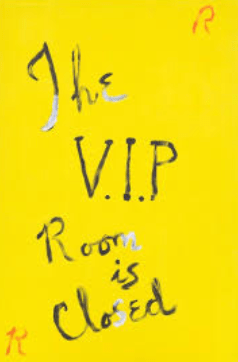
I first met Rene Ricard one night when I was walking home from work (John’s E. 12rh Street NYC) .. I ran into my good friend Alma Marti who was hanging out with Rene that night. I bump into them on 2nd Avenue in the East Village, where we all lived at the time. Alma introduced me to Rene, and we exchanged the usual pleasantries when meeting someone. We were chit-chatting and I was telling Alma that I was flying to Rome that coming Saturday (June 15, 1985). When I told them I was going to Rome, Florence, Barcelona, Venice, and Positano, Rene got quite excited and wanted to tell me all about Venice and Positano, where he had vacationed the previous Summer with his mother.
Rene told me that I should stay at the Hotel Locarno in Rome where he had stayed. The Locarno is probably the coolest hotel in all of Rome, and is favored among artists and writers, such as Ricard. Rene continued, “you have to go to the Piazza d’ Popolo to see the twin churches of Santa Maria, and go to Rosatis’s for an apertivo. Do you know what an aperitivo is? Just order a Campari & Soda or a Negroni. Get a nice table outside, it’s devine,” Rene said. Well, I would have loved to stay at the Locarno, but it wasn’t in my budget, however, seeing the Twin Churches at the Piazza del Popolo and having a Campari at Rosati’s was, and so I did.
Rene told me a hotel to stay at in Venice (can’t remember) and he told me, in Positano, that I should stay at the Villa Maria Antionetta, whcih was a very affordable little pensione right in the center of Positano, not far from the beach and all the best little trattorias and caffes / bars in town.
Rene said, “go to Bar DeMartino, it’s the best place to go to at night, all the cool people hang out there. And you have to go eat at Da Vincenzo’s next door, their Spaghetti Vongole is the best in the world.” I went there, and fell in love with bothBar DeMartino and Da Vincenzo, and Rene was right, Da Vincenzo was a wonderul trattoria, and yes, they do make the World’s Best Spaghetti with Clam Sauce, I can attest to that.
Rene was also so kind as to write me “A Letter of Introduction” to the signora at the pensione. He told her that I was his friend and would she please take good care of me while I was in Positano staying at her little guest house, Villa Maria Antionetta.
Rene gave me some great advice that night, and his name and the recommendations he gave me for Rome, Venice, and Positano often come up in some of my conversations every now and then. I bet Rene would be surprised, but happy to here of this, and that in this little way, it’s just one of the ways in which the spirit of the poet Rene Ricard is kept alive, though in a way no one including Rene would have ever dreamed. This is just a little story, but I think it is nice, and so I write it.

Mick Jagger in Positano
I arrive in at Ville Maria Antoinetta, Positano
A man told me exactly where the little pensione was, and so I headed over. It wasn’t far at all, and in no time flat, there I was at Villa Maria Antonietta. I asked the lady if she had any rooms available. She did, so I checked in, but not before showing her the “Letter of Introduction” from Rene Ricard. She took a quick glance and then brought me to my room. Once inside, I took a nice warm shower and unpacked some of my clothes before heading out to explore the town.
Excerpted from the forthcoming book POSITANO by Daniel Bellino Zwicke

Enlightenment
RENE RICARD
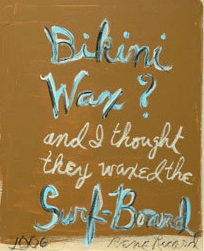
Bikini Wax?
and I thought they waxed the
Surf – Board
Rene Ricard

blow – jobs 5 cents
w/ Lipstick 25 cents
Rene Ricard 2011

Rene Ricard
If I weren’t talking to you right now I’d be…
Painting. I’m in the middle of two paintings right now.
A phrase I use far too often is…
“Hello.” I need to say goodbye more often.
I wish people would take more notice of…
My paintings. They do give them some notice, but they need to give more.
The most surprising thing that happened to me was…
That I’ve got a show at all. I’m massively excited and I think Ronnie Wood has the loveliest family – I love his wife and kids, so I can’t wait to see them again.
I am not a politician but…
If I were, I would probably be in Mark Spitzer’s shoes and be impeached. I think the most grotesque thing is they make such a big deal about it and drag his wife into it. People are shocked at all the money he spent – I think it’s good that he spent money on good whores.
I’m good at…
Parties
I’m very bad at…
Saying goodbye
The ideal night out is…
Staying home, as it’s almost impossible to do.
In moments of weakness, I…
Work. My work is all that I think about because I spent so many years not doing anything. Therefore, work pleases me, which is success in itself.
You know me as a poet, but in another life I’d have been…
A rich kid.
The best age to be is…
For a woman, the forties; for a man, the fifties. Women are really beautiful in their forties, and men seem to come of age around the period of their second wife.
In a nutshell, my philosophy is this…
I don’t have a philosophy in a nutshell; I would go on and on too much.
Toby Green
Vice: What can we expect to see in your new show?
Rene Ricard: There are some new paintings and drawings and I did some collages, which are pseudo-prints. I printed them off the computer and wrote on them and they look nice, very turn-of-the-century, 1890s or early 1900s kitsch.
Over the years you’ve transitioned from text to a more visual type of poetry and communication. How did that happen?
I began adding images because I’ve always liked to draw and paint. And it was hard to find junk-store paintings of the right quality, things that could support some writing, so I just started making the images myself. Unfortunately, people really like that, even though I far prefer just the writing. I’m vain about my handwriting. An artist once called it my “font.” [laughs]
How do you feel about state of poetry today, especially in New York?
I loathe poetry. I just gave a poetry reading, and other poets were standing up and reciting their rhymes from memory. I guess that’s cute, you know, with the backbeat, but I loathe it. I don’t like what I read in the New Yorker. I really like my own poetry a lot and I think that’s why I write it. Of all the arts, it’s the one I know the least about, and it’s interesting that it’s the one I practice and earn my living on. Anyway, yes, I like my own work. It speaks to me. [laughs]
That seems reasonable. It’s better than acting like you’re ashamed of your work, which so many poets do.
It sounds terrible because I have colleagues like Bob Holman, who I’m sure will hate hearing this even though I adore Bob and I like his work. But when it comes down to it, I like my own work the most. I don’t think that I would proliferate it the way I do unless I really liked it.
What about your acting days? Are you up for doing some of that again?
Oh, I was just in a movie that was at that Robert Redford thing. What’s it called?
Sundance.
Yes. So many of my friends are terribly young and do things like make movies. And if they ask you to do it, what are you going to say? No? You’re not going to say no. You know what I mean. If somebody needs an old man in a movie, I’ll do it.
What’s the name of the movie?
You Won’t Miss Me. My friend Ry Russo-Young made it and Stella Schnabel is in it and that’s why I did it. I play her uncle. She won an award for it—the Geraldine Page Award for Method acting. You know, Geraldine Page was my absolute favorite actor and I know all her kids. Seeing Sweet Bird of Youth at too early an age turned me queer. Geraldine Page turned me queer. She was so glamorous. I didn’t want to grow up to be a movie star—I wanted to grow up to be a faded old movie star

Rene Ricard has died. The Warhol Factory Member, film star, artist, and poet, passed away at Bellevue Hospital this weekend, taken by cancer. From GalleristNY–
Rene Ricard, the Massachussets born artisit and poet was a fixture of the New York Art World since he arrived in 1965, has died. He passed away early this morning in Bellevue Hospital, said the artist Brice Marden, wha had known Ricard since the 1960s. He died of cancer.
“This is an irreplaceable person,” Mr. Marden told The Observer. “He was really something, just on all ends of the spectrum.”
A member of Andy Warhol’s Factory, Ricard in iconic films, including The Kichen (1965), and Chelsea Girls (1966), and even played Andy Warhol in The Andy Warhol Story (1967) alongside Edie Sedgwick. He is perhaps best known for his essay “The Radiant Child” which appeared in the Artforum in 1981 and effectively launched the careers of Jen Michel Basquiat and Keith Haring, and his collections of poetry. The Tiffany-Turqoise volume Rene Ricard 1979-1980 was Dia Art Foundations debut publication.
Toward the end of his life, Ricard was represented by art dealer Vito Schnabel.
According to Mr. Marden Ricard was experiencing difficulty walking and went into the hospital a week ago for hip replacement. “When he went in they found all this other stuff,” Mr. Marden said.
Rene Ricard, the Massachussets-born artist and poet who was a fixture of New York’s art world since he arrived in 1965, has died. He passed away early this morning in Bellevue Hospital, said the artist Brice Marden, who had known Ricard since the 1960s. He died of cancer.
“This is an irreplaceable person,” Mr. Marden told The Observer. “He was really something, just on all ends of the spectrum.”
A member of Andy Warhol’s Factory, Ricard appeared in iconic films, including Kitchen (1965) and Chelsea Girls(1966), and even played Warhol in The Andy Warhol Story(1967) alongside Edie Sedgwick. He is perhaps best remembered for his influential essay “The Radiant Child,” which appeared in Artforum in 1981 and effectively launched the careers of painters Jean-Michel Basquiat and Keith Haring, and for his collections of poetry. The Tiffany-turquoise volume Rene Ricard 1979-1980 was the Dia Art Foundation’s debut publication. Toward the end of his life, Ricard was represented by Vito Schnabel.
According to Mr. Marden, Ricard was experiencing difficulty walking and went into the hospital about a week ago for a hip replacement. “When he went in they found there was all this other stuff,” said Mr. Marden, who added that Ricard’s death was unexpected. “He was going to be starting chemotherapy, but he didn’t get it in time.”
Mr. Marden, who visited Ricard in the hospital where he was surrounded by friends, said Ricard had been in good spirits. “When I saw him he was really up to it all,” Mr. Marden said. “He was obviously in bad shape but he was really enjoying the company.”
Rest in peace, starlet.
More on RENE
Ricard was a frequent contributor of essays to Artforum Magazine, here publishing one of his poems.
CARAVAGGIO & HIS MODELS by Rene Ricard, Artforum November 1984




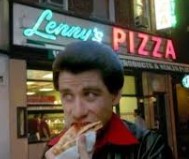
John Travolta Eats a “DOUBLE DECKER”
One Slice of New York PIZZA on Top of Another
SATURDAY NIGHT FEVER
The origin story of New York pizza starts with large waves of Italian immigrants settling in the city in the late 19th and early 20th centuries. By 1920, roughly a quarter of the 1.6 million Italian immigrants in the United States were living in New York, establishing enclaves in Manhattan, Brooklyn and the Bronx. Such neighborhoods were home to the first pizzerias, like Lombardi’s in Little Italy, which opened on Spring Street in 1905. The namesake of the Neapolitan immigrant Gennaro Lombardi, the restaurant used a coal-fired oven to create pizzas with puffy, charred crusts and a bubbling layer of tomato sauce and cheese that made it one of the most popular restaurants in Little Italy. As if in biblical succession, as apprentices left to start their own pizza operations, Lombardi’s begat Totonno’s in Coney Island, John’s in Greenwich Village and Patsy’s in what is now Spanish Harlem. These are the four acknowledged prewar pizza pillars in the city. (Though none of them was a slice joint in the current sense.)
.

The Great PIZZAIOLO Mark Iacono
Shows us The Proper Tecnique of Eating a NEW YORK SLICE
Hot, filling and eaten with the hands, pizza elicited breathless coverage from The Times fairly early on, as food writers marveled at the appealing combination of ingredients and convenience. By 1947, the paper was fully sold. “A round of dough is baked with tomatoes and anchovies and cheese atop, cut into wedges, then eaten with the fingers between gulps of wine,” the food editor Jane Nickerson enthused. “The pizza could be as popular a snack as the hamburger if Americans only knew more about it.”
Nine years later, The Times’s Herbert Mitgang contemplated the reasons for pizza’s popularity, writing, “The guess is that a number of Americans of Italian origin, aided by advertising and refrigeration, have made pizza as delectable as such other postwar imports as Lollobrigida” — referring to Gina, the saucy Roman film star. The Neapolitan-style pie became a chic dinner-party staple that could also be supplemented with a salad for a filling, family meal. But one innovation would change how New Yorkers enjoyed pizza forever.
Frank Mastro, an Italian immigrant and businessman, saw the potential for pizza to be as popular in America as the hot dog. He just had to figure out a way to make it quicker and cheaper for both restaurant owners and diners. So in the mid-1930s, he devised a gas pizza oven that maintained optimal temperatures even as the door was opened over and over.
Although it is hard to pinpoint when pizza was first sold by the slice, the introduction of the gas oven with multiple decks gave New Yorkers the option of enjoying a crisp-bottomed slice either as a full meal or a substantial snack between meals as they moved around the city. Pizza shop owners no longer needed to learn how to operate a coal-fired oven, meaning pizza could be made quicker and with less training. By the 1960s, the slice joint boom was on. And it is the slice joint that really turned pizza from an Italian food in New York City into a New York City food — a meal shared across neighborhoods, ethnicities and age groups, equally at home in the Bay Ridge of “Saturday Night Fever” as in the Bedford-Stuyvesant of “Do the Right Thing.”

.
My Favorite Slice in Town is Not a SLICE but a SQUARE
The SOHO SQUARE at PRINCE STREET PIZZA is The Best Dam piece of PIZZA
in MANHATTAN , NY
This proliferation was also helped along by the same thing that brought pizza to this country in the first place: immigration. In the ’60s and ’70s, waves of immigrants from Eastern Europe, the Caribbean and Latin America began joining the work force and landing in food service roles, where the barrier to entry was much lower than in other fields.
As one of the standard-bearers of the current slice-joint renaissance, Scarr Pimentel remembers his spot on 138th Street and Broadway. “Kids like me pretty much grew up in pizza shops,” said Mr. Pimentel, whose family moved to New York from the Dominican Republic. “If you had five bucks you could have a slice, a soda and some ice cream. It was a full meal and sometimes the owner would slip us an extra slice or something.” Mr. Pimentel opened his own pizza shop in 2016, the sleek and retro Scarr’s Pizza on the Lower East Side. His slices and pies are made with organic flour, high-quality tomatoes and cheese and carefully sourced (often organic) toppings, but the slice-joint spirit holds true. “Who would’ve thought a kid like me from the Dominican Republic would own a pizza shop in New York City one day?” he added.
.

The Great DOM DeMARCO Finishing Up one of His Masterful Pies
DiFARA PIZZERIA
BROOKLYN , NY
.
John Kambouris immigrated to Washington Heights in 1965 from a small Greek island about 200 miles east of Athens. “I had $10 in my pocket,” he said from behind the counter of Pizza Palace on Dyckman Street, which he has owned since 1979, when he bought the business from an Italian couple he knew from the neighborhood. “They say the Italians bring the pizza here, but we put our culture on it.” In the 1960s this area was Irish and Jewish, he explained. Today, the neighborhood is home to a large Caribbean population, including a large concentration of immigrants from the Dominican Republic. “I love what I’m doing … we’re making pizza that people want and I don’t have to be Italian to make good pizza,” Mr. Kambouris said, before noting, “I’ve put three kids through college off of this shop.”
It’s in hundreds of shops like his around the city, many no bigger than subway cars, where you’ll find New Yorkers shoulder to shoulder, eating slices in near silence. “Teens, Wall Street guys, guys camped out with a shopping cart, a pizza place is the most diverse space in the city,” said Colin Atrophy Hagendorf, author of “Slice Harvester: A Memoir in Pizza” and host of the Radio Harvester podcast. “Inside a pizzeria that dream of diverse New York City is a reality. I think that’s such a beautiful thing.”
.

SUNDAY SAUCE
No PIZZA RECIPE HERE
But The BEST DAM MEATBALLS
And SUNDAY SAUCE ITALIAN GRAVY
And BEST DAM PIZZA in Your Life !
.

And WORLDWIDE
.



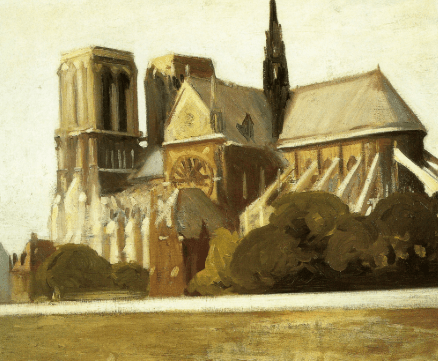
Notre Dame
EDWARD HOPPER
Paris
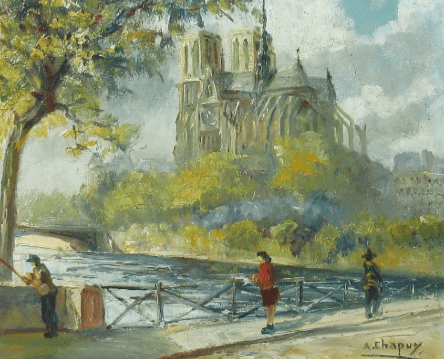
Notre Dame
Andre Chapuy
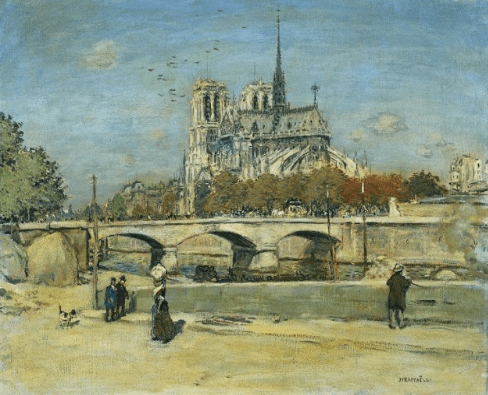
Notre Dame
PARIS
Jean Francois Raffaelli

Notre Dame
Unknown Artist

Notre Dame
In Front of Ground Zero – France
IL d’ CITE
Paris
On 15 April 2019, just before 18:50 CEST, a fire broke out beneath the roof of Notre-Dame Cathedral in Paris. By the time the fire was extinguished fifteen hours later, the building’s spire and roof had collapsed and its interior, upper walls, and windows had been severely damaged; even more extensive damage to the interior was prevented by the stone vaulted ceiling, which largely contained the burning roof as it collapsed. Many works of art and other treasures were evacuated early in the emergency, but many others were damaged or destroyed. The cathedral’s two pipe organs, and its three 13th-century rose windows, suffered little or no damage. No person, firefighter or civilian, was killed by the fire.
President Emmanuel Macron promised the country would restore the cathedral and launched a fundraising campaign which brought in pledges of €800 million within 24 hours. It has been estimated that restoration could require twenty years or more.
Construction of the cathedral of Notre-Dame de Paris (“Our Lady of Paris”) began in the 12th century, using stonework for the walls and vault and wood for the main roofs and spire. The original flèche (spire) lasted until 1383, its replacement was lost in a 1630 fire, and a third was damaged by wind and removed between 1786 and 1791; the spire lost in the fire, made of lead-covered oak and designed by Eugène Emmanuel Viollet-le-Duc, was added in the mid-19th century. The cathedral was listed as part of the “Paris, Banks of the Seine” UNESCO World Heritage Site in 1991.
In recent years the cathedral suffered significantly from crumbling stonework, primarily due to environmental pollution; for example, acid rain attacks limestone. In 2014, the Ministry of Culture estimated the cost of the renovation work needed by the cathedral at €150 million.
In 2016, the Archdiocese of Paris launched an appeal to raise €100 million over the following five to ten years to meet the costs of maintenance and restoration. At the time of the fire, it was undergoing renovations on the spire, estimated to cost €6 million. Steel scaffolding had been erected around the roofs.
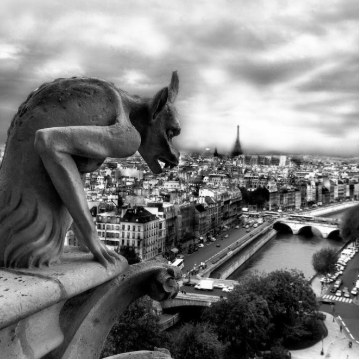
GOING to PARIS ?
FIND a ROOM

.
.



 theDannyReport