TACOS BURRITOS
BURGERS STEAKS
BURGERS STEAKS
From the Latest GOOGLE SEARCH
“BEST NEW ITALIAN COOKBOOKS” ???
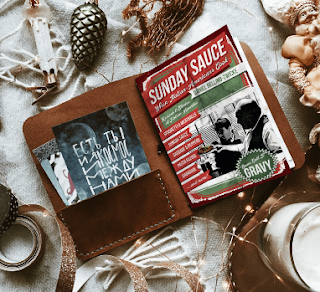
SUNDAY SAUCE is # 1
New York, October 12th 2023
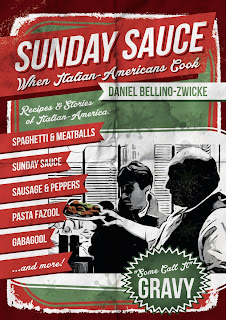
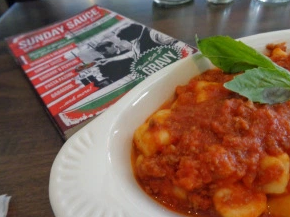
We searched Google today (October 12, 2023) for Best New Italian Cookbooks, and this is what came up. Number 1 at the Top of The List pf Best Italian Cookbooks is SUNDAY SAUCE by New York Italian-American author Daniel Bellino Zwicke. We have a couple more New Yorkers in the # 2 spot Best Italian Cookbooks with STATEN ITALY by Italian-American cousins Sal Basille, and Francis Garcia of Staten Island, New York.
In the # 3 spot is The Vespers Trial Italian Cookbook by Dominic Vesper and Thomas Vesper.
Two experts teach you how to “really cook” – in the kitchen and the courtroom. Follow Tom Vesper and cousin Dom in The Vespers’ Trial Cookbook as they take you on a fun-filled, fact-filled, food-filled, instruction-filled journey to prove the unlikely axiom that good cooks and good trial lawyers share the same skills. All the while giving civil trial lawyers tips for success – from Dom in the kitchen and Tom in the courtroom.
From glossy drops of balsamic vinegar to flakes of
parmigiano reggiano and spoonfuls of fresh ricotta to creamy grains of risotto—the ingredients of Italian cuisine are beloved staples known the world over, available in specialty stores and served in restaurants across the globe. As a native Roman raised in the Umbrian countryside, Viola Buitoni grew up with these artisanal foods, learning about how they developed from centuries-old wisdom, tight-knit communities, and sustainable production. Now a US-based cooking instructor, Buitoni’s passion is sharing the beloved flavors of her homeland with home cooks.
Not only can I look down from Hemingway’s window, I can also sit in his chair.”
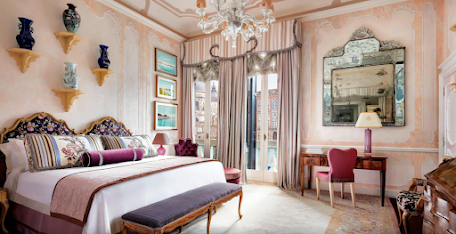
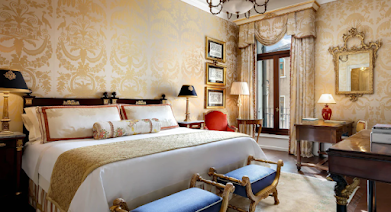
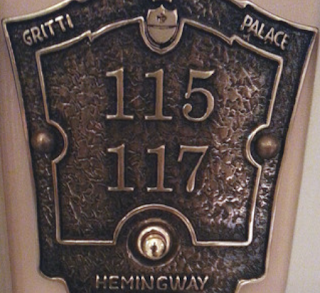
Adrian Mourby in the newly unveiled Hemingway Suite at the Gritti Palace which reopened last month after an 18 month refurbishment.
Outside my window the men who punt the black traghetti back and forth joke while waiting for customers. The traghetto has crossed at this point for centuries. There are only a few places on the great serpentine coil of Venice’s Grand Canal that are still served by them, but when Hemingway, Somerset Maugham or John Ruskin wanted to get across the Grand Canal, these eminent men of English letters could just walk outside the Gritti Palace and step on board. It’s one of the many advantages of this sixteenth century brick palazzo that became a hotel in the nineteenth.
To commemorate these writers, the newly reopened Gritti Palace has named a suite after each.
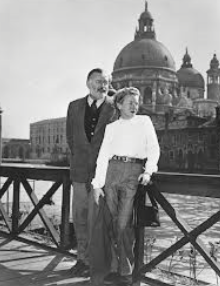
Not only can I look down from Hemingway’s window, I can also sit in his chair. When the Gritti closed eighteen months ago for refurbishment, every item of furniture, every picture and Murano glass chandelier was labelled and stored, which is why I know that Papa Hemingway sat in this unremarkable low green chair. By the time Hem was staying at the Gritti he had grown corpulent, sitting here his belly would have rested low on his thighs. As I take his place, I can’t help wondering what he would have made of the new Gritti and the suite that bears his name. No doubt he would have found it all a bit over-decorated, and more to the taste of “Miss Mary”, his hard-faced fourth wife who is pictured on the wall opposite. She and Papa are standing on the terrace of the Gritti during one of her visits, circa 1949.
There is only one Gritti Palace, and there is only one true Hemingway’s Suite.
Of course, as an avid Hemingway fan, I’m aware that when that black and white photo was taken Hem (left with Mary) was infuriating Miss Mary with a new infatuation. Ernest Hemingway was 50 and had recently fallen for a young Venetian artist, Countess Adriana Ivancich. She was only 19 and quite unaware of the strength of his feelings. Frustrated, Hemingway poured his passion into the worst he ever wrote, Across the River and into the Trees. The story is a thinly veiled fantasy in which an old American colonel, marked for death, is having a barely unconsummated affair with Renata, a young Venetian aristocrat. Hem wrote the book fuelled by crates of Valpolicella which he would buy from Harry’s bar round the corner. I feel rather sorry for the author, physically old before his time, staggering back to the Gritti at night or waking as light played on the surface of the Grand Canal, and taking a bottle of Valpolicella and the Herald Tribune to the lavatory with him, as Colonel Cantwell does.
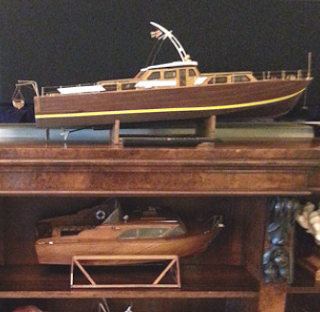
A man needs toys. Big men need big toys.
When the book came out, it was a critical disaster. Worse Hemingway made the guilty mistake of dedicating his book of Adriana fantasies to Mary. No wonder she looks so tightly wound in that photo. Ironically the critical mauling that Hemingway received over Across the River and into the Trees spurred him to hit back with The Old Man and the Sea, which won him the Nobel Prize for Literature – though I’m sure Mary Hemingway would have had something to say about the fact that the cover illustration of that book was done by the young woman he fell in love with in Venice.
As if it were an old, reclusive celebrity, a coworker asked, “Does Blimpie’s still exist?” Yes, yes, Blimpie is still alive and, presumably, well. At the very least, there are still plenty in NYC. While we associate the sandwich franchise with 1990s strip malls, did you know one of the first shops opened here in the 1960s? Here it is, your short and probably totally unnecessary history of Blimpie.
First of all, Blimpie is called that because one of the founders, Tony Conza, didn’t like the sounds of “subs.” Conza, along Peter DeCarlo and Angelo Bandassare, opened their first shop in Hoboken in 1964, and apparently people in the area weren’t familiar with the term “hoagie,” so that was out, too. As the legend goes, Conza found “blimpie” while flipping through a dictionary, and felt it was appropriate.
“BLIMPIE” – A BRIEF HISTORY
Blimpie began its journey on the Jersey side of the Hudson River when 3 high school pals teamed up after graduation to develop it with $2,500 in funding, They opened the first Blimpie at the corner of Seventh and Washington Streets in Hoboken, N.J., according to NJ.com.
The year was 1964, and Blimpie didn’t want to sound like just another submarine sandwich company — a factor that factored into its name. Scouring a dictionary, Blimpie’s young brain trust was quickly drawn to the word ‘”blimp” and the accompanying picture that they felt resembled the bread of a submarine sandwich (per QSR).
The ship-to-sub comparison was apt enough for founders Tony Conza, Peter DeCarlo, and Angelo Baldassare, who approved a name that would see the company long past its first location. That being said, Blimpie’s first sandwich shop no longer exists.
Blimpie’s ideological foundation was first laid out during a party conversation between founders Tony Conza, Peter DeCarlo, and Angelo Baldassare in Jersey City, N.J. According to the New York Times, the atmosphere and accompanying drinks catalyzed a brainstorm of business ideas. Unsure of what kind of venture to start, the future Blimpie founders tossed around concepts until they eventually settled on the idea of a sandwich shop.
Blimpie’s belief that this concept could work was backed by the success of Mike’s Submarines in Point Pleasant, N.J., a place that was typically bursting with patronage. Intrigued by its popularity, Blimpie’s founders performed some culinary espionage by eating some of Mike’s Subs. Impressed by what they ate, they opened their own sandwich shop in a similar vein. Mimicking their mentor proved a sage choice, as both sandwich chains still exist today. There is one exception, though — Mike’s Submarines is now known as Jersey Mike’s.
Long before “move fast and break things” became a popular startup motto, Blimpie was stirring up dust and drywall in the 1960s. Aggressively gunning for expansion, the founders of Blimpie exploded their base readily. By 1967, they had successfully expanded into Manhattan, with 10 Blimpies already churning out hoagie-style Subs.
Four of these franchises were owned by founders Tony Conza and Peter DeCarlo, and although it may not sound like much in our age of easy venture capital, running 4 Blimpies back then proved more than Conza and DeCarlo could handle.
Unable to keep lightning in the bottle without a formal business education, Conza and DeCarlo were flying by the seat of their pants. Per the New York Times, Conza and DeCarlo “admitted they weren’t skilled businessmen.” As it turned out, they were “incautious about the costs of goods and employee salaries.”
Conza and DeCarlo would bend but would not fold, selling all 4 Blimpies they personally owned. They shifted their focus on building back Blimpie’s bottom line through franchising.
In 1976 BLIMPIE SPLIT Into TWO COMPANIES
It’s tough to keep even the best teams together, and the Blimpie crew was no exception. Citing a difference in opinion, as DeCarlo wanted to keep Blimpie East Coast and Conza wanted to expand southward, the original founders decided to reform Blimpie into 2 distinct companies under the same trademark.
It was decided DeCarlo would run Blimpie Metropolitan and retain control of the majority of Blimpie’s New York, New Jersey, and East Coast locations. Conza would head the original company, but renamed it International Blimpie Corporation while crafting a new imprint. Conza relished the opportunity and quickly franchised Blimpies “wherever there was interest,” according to the New York Times. Conza would eventually admit the error of his ways, and over the years, many of those locations damaged the brand before closing down. They allegedly drove customers up the wall with filthy bathrooms and discordant employees.
Blimpie went public in 1983
In the blur of Blimpie’s forced growth throughout the 70s and 80s, they also sought public investment. Blimpie’s rise was rapid, but stores were closing rapidly as well (via Reference for Business). It’s clear the underwriter held reservations, as Blimpie’s initial public offering debuted at 90 cents per share — an unpromising number, even when adjusted for inflation. It served as a flashing indicator that the 80s would bring turbulent times for this blimp-inspired brand.
Blimpie’s aggressive expansion also resulted in marks against sanitation. Founder Tony Conza’s loose approach to franchising led to undisciplined franchisees and resulted in a massive identity crisis for the Blimpie brand. According to the New York Times, Blimpie had such “renegade owners” who flouted their business formula that some bad actors even sold Chinese food and pizza. However, there was a silver lining — these maverick moves were also a cry for help, begging Blimpie to expand its menu. It became an idea it pursued in the following decade.
If you’ve ever wondered why Subway is so enormous, a big part of that may be Blimpie’s decision to pump the brakes on its best product in the 1980s: the sub sandwich.
As Subway made moves in the submarine sandwich sector, Blimpie pivoted toward a sit-down restaurant idea that became the Border Cafe (via the New York Times). It was a short-lived endeavor that hemorrhaged funds shortly after striking ground in Manhattan. Although Border Cafe’s initial numbers were promising, not even former New York Yankee great Dave Winfield could save them as a partial owner (via Reference for Business). However, that was the small problem. The big problem? Blimpie gave Subway an inch and it took a mile. It padded a sandwich-selling lead that only grew wider and would never again be threatened by Blimpie.
If you’ve ever wondered why Subway is so enormous, a big part of that may be Blimpie’s decision to pump the brakes on its best product in the 1980s: the sub sandwich.
As Subway made moves in the submarine sandwich sector, Blimpie pivoted toward a sit-down restaurant idea that became the Border Cafe (via the New York Times). It was a short-lived endeavor that hemorrhaged funds shortly after striking ground in Manhattan. Although Border Cafe’s initial numbers were promising, not even former New York Yankee great Dave Winfield could save them as a partial owner (via Reference for Business). However, that was the small problem. The big problem? Blimpie gave Subway an inch and it took a mile. It padded a sandwich-selling lead that only grew wider and would never again be threatened by Blimpie.
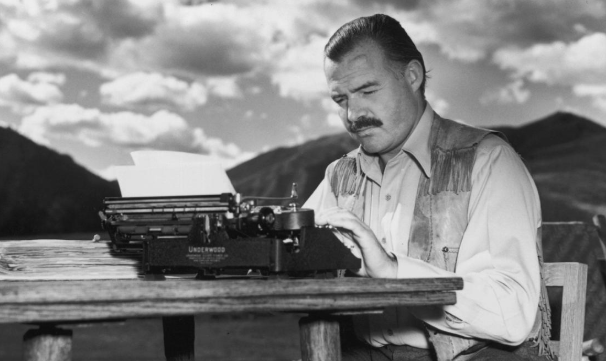
HEMINGWAY
Yes, it was the great Ernest Hemingway who inspired me to write. And it wasn’t just his great writings but the man and the life he led. For Hemingway was the ultimate Man’s Man as they say. He was rough and tumble and didn’t take crap from know one. A lady’s man Ernest Hemingway was, a hunter, adventurer, traveler, writer, and mercenary. The man’s life was even more interesting than the characters in his books.
The first book I read by Ernest Hemingway was a required read in High School English Class when we were assigned to read and study The Old Man & The Seas, Hemingway’s great classic novel of the old Cuban fisherman Santiago in Havana, Cuba and his fight and struggles to fight a great fish, a fight that mimics the struggles of life.
I read just about everything Hemingway I could get my hands on; all his novels, his short stories, and biography’s and articles written on the great writer of prose. I read a Farewell to Arms, The Sun Also Rises (my favorite), the complete short stories, magazine articles, and the bibliography “Papa Hemingway” by close friend and biographer A.E. Hotchner.
I traveled in the footsteps of Hemingway, going to his homes in Key West and Havana, Cuba. I bought a book called Hemingway;s Paris, and I followed in the footsteps of the great writer, going to all his favorite restaurants and cafes. I ate Choucroute at Brasserie Lipp on the Boulevard Saint Michel in Paris, I had drinks at Cafe Select and Closerie des Lilas, both on the Boulevard Montparnasse. I strolled the Luxenbourg Gardens, and at escargots and drank Beaujolais at Polidor, just like Ernest did. Yes I wanted to be Hemingway, I tried and tried, but I would never come anywhere near close to being the writer that Ernest Hemingway was. I could write nice little short stories, but a novel? No way. I have become a writer, I know, not a great one, not by a long shot, but a writer never-the-less, and a published and Best Selling Author at that, no less, but no Hemingway. But my writings do serve a purpose, and many do like (even love) my writings (books). I write about Italian Food, Italy, and the Italian, and Italian-American lifestyle and culture. I write little stories about Italian Food, Italian-Americans, Italy, and Italians, and people seem to like them.
Hemingway helped teach me to write, and I taught myself to write with the help of the great Ernest Hemingway and other writers. I’t go to my favorite cafe in Greenwich Village, Caffe Dante, and I’d write. I’d write and write and practice as much as I could. I’d read and write, trying to hone my craft, the craft of writing. I dreamed of writing a great novel as all writers do. This would not happen. Who knows, maybe it will one day, but don’t count on it. I don’t, but you never know, someday my writing skills may one day develop enough to do so, “one never knows.”
Before I ever started writing, I’d never known that I’d be able to write and have a book published, did I? I now have seven books published and three of them have become best sellers and I am a Best Selling Author, but not of novels. I wish I could write a great screenplay, that would be made into a successful movie, but as of now? No way, but I have had some good success and I’m quite happy the way things have developed. I make some money at it, I’m not rich, and I still have my day job, but I love what I do, and I am quite happy doing all this. Going to the cafe, just about every day, and I write, I promote, and I learn, all thanks to Hemingway, the man who inspired me. To write.
Basta.
Daniel Bellino Zwicke
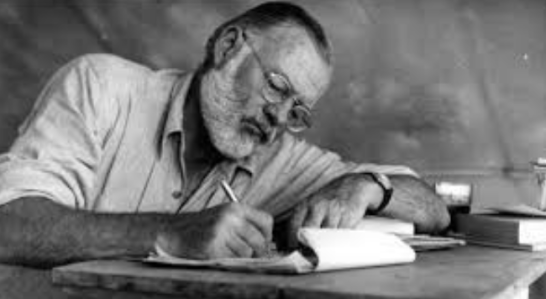
Ernest Hemingway
Part II
My 1st Book. My first book was La Tavola. How I wrote it, and how quick I wrote it was quite amazing. Of course I had always wanted to write a book, I started one called The Bachelors Cookbook, but I never finished it. I didn’t have the tools, or a formula. After starting that first book, The Bachelors Cookbook was a cookbook to teach and help bachelors how to cook, but not only that. It was a book to teach bachelors (single men) how to cook, and subsist on their own, and how to save money by cooking and make life easier and more enjoyable for themselves. But there was another major angle to the book, and that was how to meet and romance women, by learning and knowing how to cook for them, and how by doing so would greatly enhance you chance of having romantic interludes and relationships with the opposite sex, women. Well I thought, that this was all great, and it was and is, and now that I’m reading this, and rehashing on this great idea of mine, and I now have quite a lot of experience, know-how and all that, that I think it’s high-time that I do it. I now have the formula.
The formula? What is it you ask? Well, I do have a very good writing formula to write and produce good non-fiction books. For me, non-fiction is a whole lot easier to write than fiction, which I know I’m not great at, but non-fiction is a whole other thing, and I do believe I’m pretty good at this, and my track record has proven so with 7 books, three of them Best Sellers.
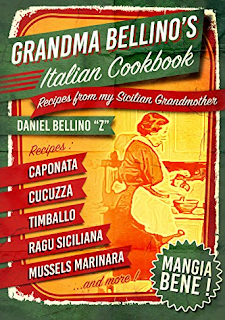
So back to my formula, what is it you ask? Well, the whole ting is to # 1 have a Theme of what you book is going to be about. For me, I write about food, travel, and experiences regarding these subjects and subject matter. I write mostly about food and to be more specific Italian and Italian-American Food and lifestyles. I’ll think up a them, Sunday Sauce for example, and then building a book around this. Sunday Sauce is the famed Italian-American dish, also known as gravy, that Italian-Americans eat each and every Sunday all over America, and especially in the great Italian Americans enclaves of New York, Boston, New Jersey, Baltimore, Brooklyn, and other parts of the country that have Italian neighborhoods with a strong Italian population that includes business such as Italian Restaurants, caffes, Pork Stores, Bakeries, specialty shops, Italian Butcher Shops, and the like, necessary for Italian living.
When you have your theme, you need to make an outline with topics and sub-topics that pertain to the main theme of the book. So with my book Sunday Sauce I had an outline that included such topics as Meatballs, the Pork Store, Pasta and other topics that pertained to Sunday Sauce, how to make it, the rituals around it. as well as stories and antidotes that tied into this main theme of the book.
Taking the topic of pasta, several sub-topics to pasta in my book Sunday Sauce were; Spaghetti Vongole (Clam Sauce), Spaghetti Meatballs, Tomato Sauce and other topics.
Once I had my outline, I’d write one-by-one on each topic in the outline. Each topic was a chapter in the book and I’d knock them off one at a time. It was easy.
Now I’ve had a lot of different experiences as far as Italian Food and cooking go. I have a great repertoire of recipes that are in my books, so I tell stories about the food, the dishes, I have my recipes that are included in the book, and my books are a collection of Italian recipes as stories of all the different dishes in the great repertoire of Italian Cuisine. And a large part of all this is to inspired people to cook wonderful Italian dishes, and to bring friends and family together at the dinner table. This is what it’s all about; cooking tasty Italian Food, eating with friends and family, and having wonderful times around the table. This is my passion, and that’s a Key element
. in all of this. if you have a passion, write about it, and it all should come together easily. And so this is how I do it all. This is how I’ve had seven books published, and I keep doing it. I enjoy it. I love it, and hope you will to. Good Luck.

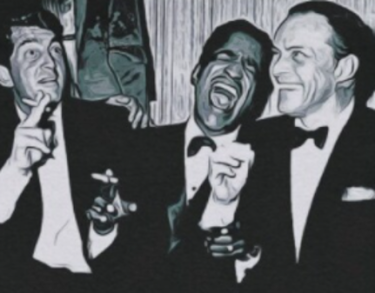
3. There were actually two different Rat Packs, one popular in the ’50s and another (the most famous and notable) in the ’60s. The first consisted of Humphrey Bogart, Mickey Rooney, Errol Flynn, Frank Sinatra, Nat King Cole, Cesar Romero and Jerry Lewis.
4. The name of the iconic Great Dane cartoon character Scooby-Doo has Frank Sinatra to thank for his namesake. The famous mutt’s creator, Iwao Takamoto, listened to Sinatra’s hit song “Strangers in the Night” and noticed his scatting (which sounded like “dooby dooby doo.”) This ultimately led to the character’s name.
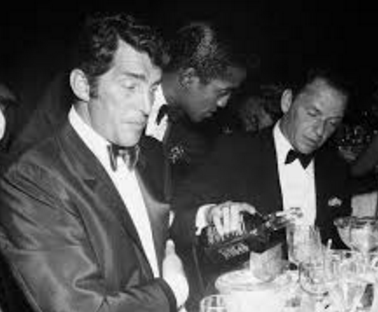
5. Ocean’s 11 (1960) was a famed heist movie that featured all five of the Pack’s members in lead roles (Frank Sinatra, Sammy Davis Jr., Dean Martin, Peter Lawford and Joey Bishop).
6. Dean Martin wasn’t actually a big fan of parties, despite his reputation and membership in the Pack. Not only was he religious and a devout Catholic, but he was also self-described as shy and ashamed of the way he spoke.
7. Joey Bishop was considered the more serious man of the group regarding comedy and wild antics. Ironically, he was also the member who wrote their comedic material behind the scenes.
8. Bishop was also insecure about his standing with the Pack and felt like an outsider. He would constantly wait for an invitation to join the rest of the group when dining. His close friend Sinatra once reportedly said, “Goddammit, how long does he have to be with me before he knows he can eat with us?”
9. The group often performed at the Copa Room in the Sands Hotel in Las Vegas. Whenever a member was booked, billboards would hint at the surprise appearances of the other members.
10. The Rat Pack was known for its association with many famous actresses, including Lauren Bacall, Shirley MacLaine, Marilyn Monroe, Juliette Prowse and Angie Dickinson. The leading ladies made many appearances in the Rat Pack films. Frank Sinatra even had romantic relationships with Prowse and Dickinson.
More RAT PACK Stuff
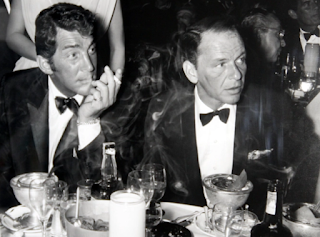
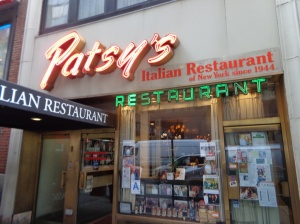
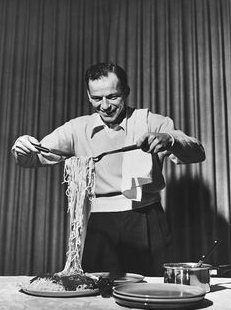
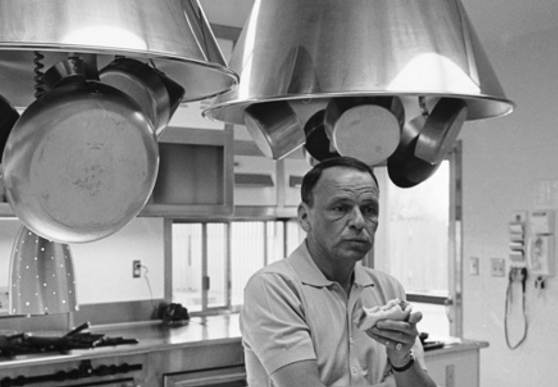
Frank Sinatra, both the greatest singer and greatest entertainer of the 20th Century. No question. Sinatra was a legendary icon whose star still shines bright. He was a musical icon, celebrity, international personality, and to millions of Italian-Americans he was our own, a paisan. Frank was an Italian-American whose ancestry is from Genoa on his mother’s side of the family and Sicilian on his father’s side. And being Italian, Frank loved the food he grew up with, Dolly made a mean Marianara Sauce as well as Meatballs and the all-time Italian-American favorite Sunday Sauce (aka Gravy). Frank loved the food of his childhood; the Spaghetti & Meatballs, Stuffed Artichokes, Pasta Fazool, Frittata, Eggplant Parmigiana and all the usual suspects of the Italian-American table. It’s a well known fact that Frank’s favorite restaurant was Patsy’s on 56th Street in New York … When Frank went to Patsy’s his favorite dishes were Calms Posillipo and Veal Milanese with a nice plate of Spaghetti Pomodoro in-between, and maybe a slice of Cheesecake to finish if Frank was in the mood.
FRANK and AVA
“MANGIA BENE”
Frank Sinatra dines with Marylyn Monroe
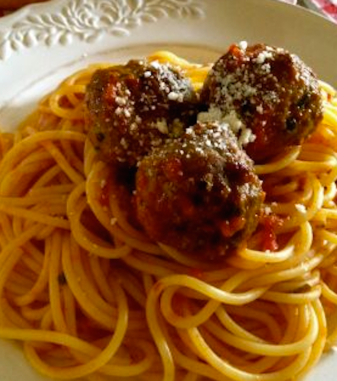
SPAGHETTI & METBALLS
alla SINATRA
RECIPE
San Domenico Palace, Taormina, A Four Seasons Hotel is a unique hotel, with terraces overlooking Mount Etna and the Bay of Taormina. It features a fitness centre, a beauty corner, and an outdoor swimming pool.
This luxury hotel in Taormina consists of 2 historic buildings. The Garden Wing is a former 15th-century convent with cloister. The Grand Hotel Wing was added in 1896.
All rooms are uniquely decorated, and equipped with air conditioning and TV with satellite channels. Most rooms offer views of the sea, and some also have a private balcony.
Mentioned in the most famous food guides, the restaurants and bars of the hotel serve traditional Sicilian cuisine. Breakfast buffet is served at the restaurant and includes local pastries.