ITALY
.
.
The BIG LEBowSKI COOKBOOK
GOT ANY KAHLUA ?
Theodore Roosevelt and Teddy Bear
How did toy bears come to be named after President Theodore Roosevelt?
It all started with a hunting trip President Roosevelt took in 1902 in Mississippi at the invitation of Mississippi Governor, Andrew H. Longino. After three days of hunting, other members of the party had spotted bears, but not Roosevelt.
Now what? The President’s bear hunt would be a failure! The next day, the hunt guides tracked down an old black bear that the dogs had trailed quite a distance and attacked. The guides tied the bear to a willow tree and called for the President. Here was a bear for him to shoot!
But Roosevelt took one look at the old bear and refused to shoot it. He felt doing so would be unsportsmanlike. However, since it was injured and suffering, Roosevelt ordered that the bear be put down to end its pain. Word of this hit newspapers across the country, and political cartoonist Clifford Berryman picked up on the story, drawing a cartoon showing how President Roosevelt refused to shoot the bear while hunting in Mississippi.
The original cartoon, which ran in the Washington Post on November 16, 1902, shows Roosevelt standing in front. The guide and bear are in the background, and they’re about the same size. Later, similar cartoons appeared, but the bear was smaller and shaking with fear. This bear cub then appeared in other cartoons Clifford Berryman drew throughout Roosevelt’s career. That connected bears with President Roosevelt.
The Teddy Bear tie came when a Brooklyn, NY candy shop owner, Morris Michtom, saw Clifford Berryman’s original cartoon of Roosevelt and the bear and had an idea. He put in his shop window two stuffed toy bears his wife had made. Michtom asked permission from President Roosevelt to call these toy bears “Teddy’s bears”. The rapid popularity of these bears led Michtom to mass-produce them, eventually forming the Ideal Novelty and Toy Company.
At about the same time, a Germany company, Steiff, started making stuffed bears. Margaret Steiff earned her living by sewing, first by making stuffed elephants, then other animals. In 1903, an American saw a stuffed bear she had made and ordered many of them. These bears, which also came to be called Teddy Bears, made the international connection.
More than a century later, teddy bears have never lost popularity, and all can be traced to that one hunting trip in Mississippi.
An Original TEDDY BEAR
at The SMITHSONIAN AMERICAN HISTORY MUSEUM
Teddy bear early 1900s – Smithsonian Museum of Natural History – 2012-05-15
An original “Teddy Bear” from 1903, manufactured by Benjamin Michton, son of the founder of the Ideal Toy Co. This bear was owned by Theodore Roosevelt’s grandson, Kermit. Michton gave the bear to him in December 1963. The Roosevelts donated it to the Smithsonian a month later.
The name “Teddy Bear” comes from a political cartoon which made fun of President Theodore Roosevelt. Roosevelt went on a bear hunting trip in Mississippi in November 1902. A small black bear was cornered, clubbed, and tied to a tree. The hunters offered to let Roosevelt shoot it, but he refused — saying it was unsportsmanlike. Roosevelt did ask that the bear be killed to end its suffering.
On November 16, 1902, “Washington Post” political cartoonist Clifford Berryman drew an image of a disgusted Roosevelt refusing to kill a cute little bear. The cartoon was used to poke fun at Roosevelt’s over-zealous hunting, fishing, and camping lifestyle.
Morris Michtom, owner of a New York City toy store, saw the cartoon. He created a small stuffed bear cub toy, and sent it to Roosevelt. He asked the president’s permission to use the name “Teddy”, and Roosevelt consented.
The toys were an immediate success. By 1906, ladies carried “Teddy bears” with them everywhere, children were photographed with them, and Roosevelt used one as a mascot in his re-election campaign. Michtom used his profits to found the Ideal Toy Co.
Early teddy bears were made to look like real bears, with snouts and beady eyes.
On display at the Smithsonian Museum of American History in Washington, D.C.
Theodore Roosevelt and The TEDDY BEAR
Washington Post 1902
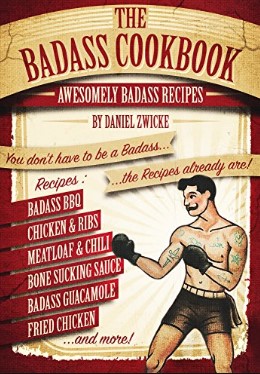
The BADASS COOKBOOK
BADASS LIKE TEDDY
Learn How
to COOK
The PERFECT TEDDY ROOSEVELT
ROUGH RIDER STEAK
.
.
.
STATUE of CHRISTOPHER COLUMBUS
COLUMBUS CIRCLE
Mayor Bill de Blasio announced on Thursday plans to keep the CHRISTOPHER COLUMBUS Statue at Columbus Circle, following a 90-day review of the city’s monuments and markets by a mayoral advisory commission. Although the statue will stay put at its Upper West Side location, the city plans to add new historical markers to explain the history of Columbus and also commission a new monument to honor Indigenous peoples. The statue of Theodore Roosevelt in front of the American Museum of Natural History and the plaque memorializing Henri Philippe Pétain in Lower Manhattan will also not be removed or relocated, but more information and context will be added to them.
COLUMBUS Still Looks Over MANHATTAN
Angelo Vivolo, president of the Columbus Heritage Coalition, commended the city for preserving the Columbus Circle statue and for creating one honoring Indigenous Peoples. But Vivolo said adding a plaque “that depicts our hero in a negative light is unwelcome and offensive.”
He added, “As Italian-Americans, we will avail ourselves of any and all legal, political, and legislative initiatives to challenge any attempts made to alter the Christopher Columbus statue, which has universally served as a symbol of ethnic pride to all generations of Italian-Americans.”
.
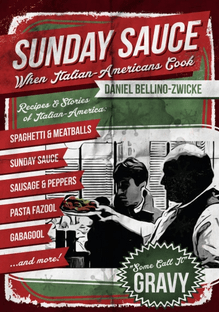
SUNDAY SAUCE
Honors CHRISTOPHER COLUMBUS
WHEN ITALIAN-AMERICANS COOK”
.
.
Related News
TEDDY ROOSEVELT STATUE STAYS
The MUSEUM of NATURAL HISTORY
NEW YORK , NY
.
The BADASS COOKBOOK
“BADASS Like TEDY ROSEVELT”
SECRET RECIPES
Of AMERICAN FAVORIES
.
“WHAT THE FUCK” ???

..

Written by Lennon as an anguished love song to Yoko Ono, it was interpreted by Paul McCartney as a “genuine plea”, with Lennon saying to Ono, “I’m really stepping out of line on this one. I’m really just letting my vulnerability be seen, so you must not let me down.”
The song is in the key of E major and is in 4/4 time during the verse, chorus and bridge, but changes to 5/4 in the pick-up to the verse. It grew (like “Sun King”) from the F♯m7- E changes from Fleetwood Mac’s “Albatross” (“like she does” [F♯m7] “yes she does” [A, Am] “yes she does” [E]) with McCartney arranging instrumental and vocal parts and Harrison adding a descending two-part lead guitar accompaniment to the verse and a countermelody in the bridge. Alan W. Pollack states that “the counterpoint melody played in octaves during the Alternate Verse by the bass and lead guitars is one of the more novel, unusual instrumental touches you’ll find anywhere in the Beatles catalogue.
GET BACK
DON’T LET ME DOWN (Side B)
BRITISH SINGLE
Released April 11 , 1969
Lennon – McCartney
The BEATLES with BILLY PRESTON
RECORDING and RELEASE of “DON’T LET ME DOWN”
Multiple versions of “Don’t Let Me Down” were recorded by the Beatles during the tumultuous Get Back (Let It Be) recording sessions. The version recorded on 28 January 1969 was released as a B-side to the single “Get Back”, recorded the same day. “Get Back” reached number one and “Don’t Let Me Down” reached number 35 on the US Billboard Hot 100.
They performed “Don’t Let Me Down” twice during their Rooftop Concert of 30 January 1969, one of which was included in the Let It Be (1970) film, directed by Michael Lindsay-Hogg. When the “Get Back” project was revisited, Phil Spector dropped “Don’t Let Me Down” from the LET IT BE (1970) album.
The B-side version of the song was included on the Beatles’ compilations Hey Jude, 1967-1970 and Past Masters Volume 2 and Mono Masters. The same recording also appears on the soundtrack to the 1988 documentary, Imagine: John Lennon. In November 2003, an edit of the two rooftop versions was included on Let It Be… Naked.
RECEPTION
Richie Unterberger of AllMusic called it “one of the BEATLES ‘ most powerful love songs”, Stephen Thomas Erlewine of AllMusic described the song as “heart-wrenching soul” and Roy Carr and Tony Tyler called it “a superb sobber from misery-expert J. W. O. Lennon, MBE. And still one of the most highly underrated Beatle underbellies.” Author Ian MacDonald praised “Don’t Let Me Down” and declared that “this track vies with Come Together for consideration as the best of Lennon’s late-style Beatles records”.
Cafe Society by legendary Director Woody Allen was quite a nice surprise, I just loved it. The film follows a young slightly naive Booby Dorfman who leaves New York and the dull job working for his father in the jewelry business in New York. Booby heads to La La Land, Hollywood of the 1930s where his Uncle Phil is a high-powered agent who Bobby hopes to get work with. Uncle Phil is not that interested in Bobby and brushes him off for two weeks before he does finally see Bobby. Phil finally meets with Bobby. He knows Bobby is trying to get a job working for him, but tells Booby that there is nothing available. Bobby tells Phil that he’ll do anything, and Phil tells he do errands for him.
Phil introduces Bobby to his secretary Veronica, nicknamed Vonnie (Kristen Stewart), who is tasked with helping Bobby settle into Hollywood. Bobby is drawn to her unpretentiousness as opposed to most young women living in Hollywood, and falls deeply in love with her. She rebuffs his advances, telling him she has a journalist boyfriend named Doug. In reality, “Doug” is Phil, with whom Vonnie is carrying on an illicit romance; he promises to divorce his wife and marry her.
Kristen Stewart was wonderful as Bobby’s love interest Vonnie. She is radiant on screen, and quite beautiful.
to be continued …