HOTEL DIMORA FORNILLO
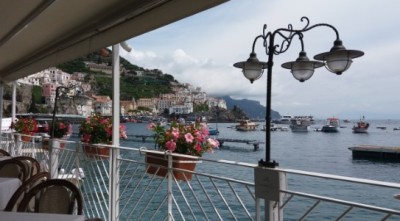
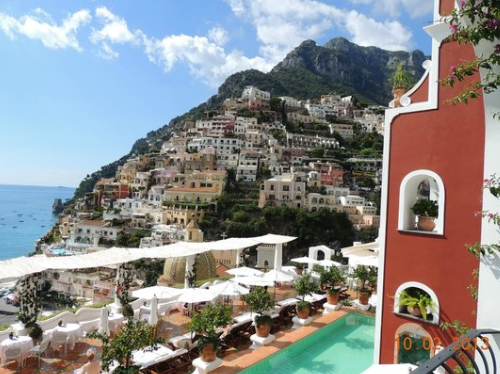
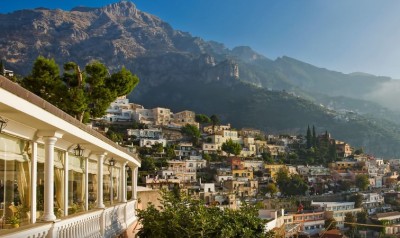
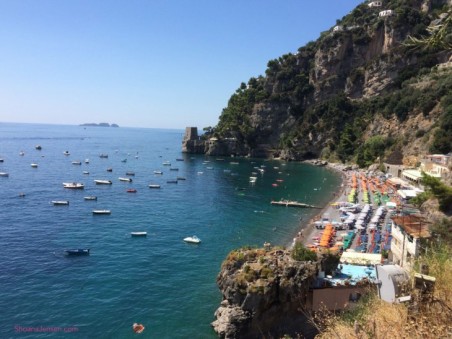
View from the Terrazzo at Hotel Dimora Fornillo
POSITANO
A Room with a VIEW
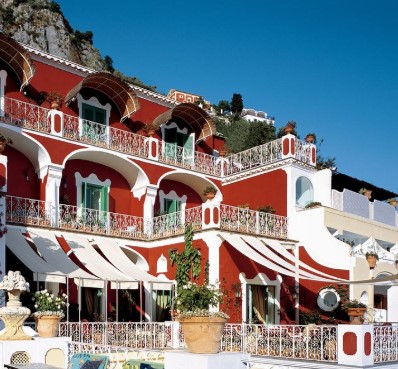
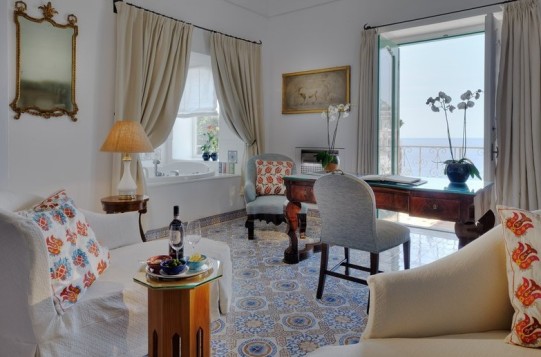
Hotel Dimora Fornillo
HOTEL DIMORA FORNILLO … Via Fornillo 27 , POSITANO
About 200 Steps up to the Hotel from the Beach and Center of town.
AC Free Wifi …
Free BREAKFAST Reserve a Room
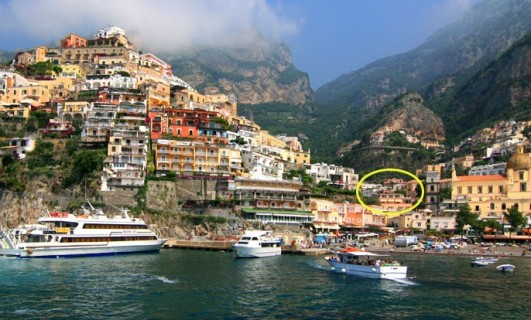
VILLA MARIA ANTONIETTA
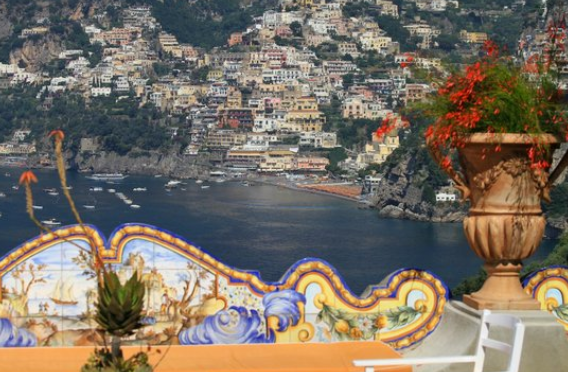
View From VILLA MARIA ANTONIETTA
If You’re on a Budget, Villa Maria Antonietta is on of The Best Options in Town …
Posiitano has to be one of the hardest place in the World to find a hotel room, and in the Budget Category, almost but not Impossible. Villa Maria Antonietta is one of your best options if you want to pay less than $150 US Dollars a night. It’s almost impossible finding a room here in the high season (April to Mid October). You have a much better chance getting a room here in the off-season when you can get a room for about $96 a night (US Dollars).
I first stayed here in the Summer of 1985, and was recommended this place by the late Poet RENE RICARD. At the time I paid $40 a night, so considering the way things have skyrocketed here in Positano, that you can get a room for about double the price in 2018, that’s pretty reasonable.
The accommodations are basic, but most important, they are clean, the location is Fantastic, you are in Positano and it’s relatively Cheap.
If you want to stay in in Summer, Book Far in Advance !!!
Just 1,900 Feet from the Main Beach and Marina to catch Boats (Ferries) coming and going to Positano.
VILLA MARIA ANTONIETTA … Via C. Colombo 41 , POSITANO , ITALY
ROME to POSITANO The AMALFI COAST
PRIVATE DOOR to DOOR TRANSPORTATION
NAPLES AIRPORT to The AMALFI COAST
HOTELS & FLIGHTS
HOTEL CONCA D’ ORO
Hotel Conca D’ Oro
Positano
View From Balcony
HOTEL CONCA D’ ORO
POSITANO
Afforadable with Average Room Rate of $145 a Night US Dollars
150 Steps Up, about a 15 Minute Walk to The Main Beach
HOTEL CONCA D’ ORO …. Via Boscariello 16 , POSITANO , ITALY Info
.
TIPS on GETTING a ROOM in POSITANO and The AMALFI COAST
Positano has to be without question one of the hardest places in the World for the Budget minded to get a hotel room. There are not many options, as most hotels, the prices are astronomical priced. Seriously! This being said, it’s not impossible and there are some options available.
We have Compiled a List of Several Affordable (Cheapest Hotel Rooms in POSITANO) Options for the Budget Minded. It wasn’t easy, but we did it.
It goes without sayint that’s it’s markedly more dificult to find a reasonably priced room here during the high season which runs from mid April to mid September, with mid May to the first weel of Septemeber being super busy.
This all being said, if it’s possible for you to go in October or April, these two months might be your best possible option. If you have plenty of cash and can afford to pay $300 or more a night for a hotel room, then you won’t have as much as a problem.
The other alternative to see Positano if you want to go during the High Season, is to stay in another town like, Paiano right next door to Positano, or Minori, Sorrento or other town near by, and take a bus or Boat to visit Positano, have a nice lunch and do some sightseeing.
Good Luck!
.
.
.
POSITANO The AMALFI COAST
COOKBOOK & TRAVEL
POSITANO – ROLLING STONES
At BUCA di BACCO
Positano , Italy
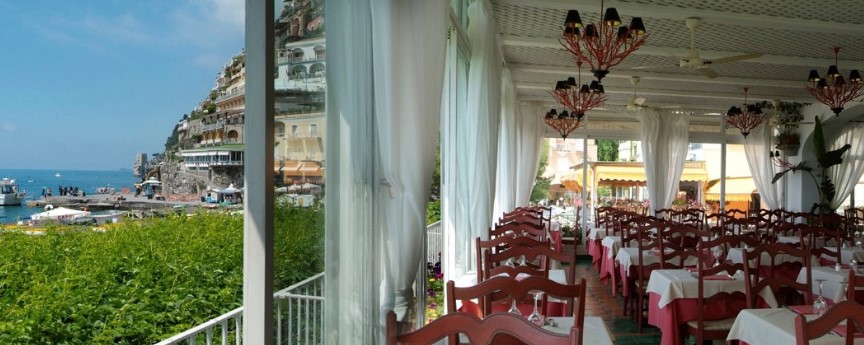
Yes a Wonderful Ristorante Amazing View Great Food Excellet Service … This Hotel and Restaurant is a mainstay of the hugely popular town of Positano on the Amalfi Coast of Italy. Everything about the place is First Class, the hotel of course , the restaurant and a friendly professional staff of waiter, BBs, host, Chef, cooks, and all who work at this establishment. I’ve eaten here numerous times since 1985, and it’s always been a great experience including my latest trip this past May with my cousin Tony. We went for lunch, this was my cousin Tony’s first time, and he loved as I always have. I think I created a Monster when my cousin Tony said let’s get a bottle of Champagne and a suggested we might get a good quality Italian Sparkling Wine. A few days before we were at Lo Smeraldino Ristorante right on the water in Amalfi. I ordered the Ferrari “Perle” Brut 2007. It was wonderful and Tony was hooked, he loved it, and wanted to get it at almost every restaurant we went to for the rest of the trip. Now back to Buco di Bacco. Tony scanned the Wine List at Buco, he found the Ferrari “Perle” and ordered another bottle (Vintage 2010). We started drinking it and as with the 5 or so bottles of this wine we had on the trip, it was excellent and we thoroughly enjoyed. Now when it came to ordering, for Antipasto we got an order of Melanzane Parmigiano (Eggplant Parm) and some grilled vegetables. Now, though we both love eating Seafood when down on the Amalfi Coast, when we saw Meatballs (Polpette) on the menu, we both ordered some. I ordered a plate of Spaghetti Meatballs while Tony ordered just Meatballs minus any pasta.
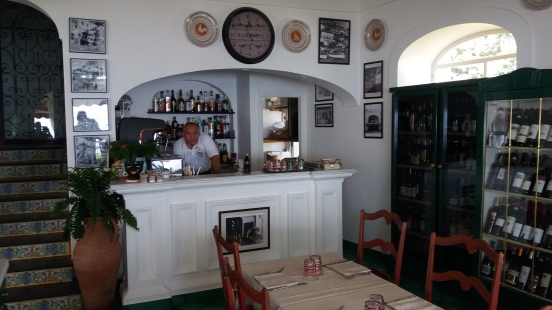
The BAR at BUCO Di BACCO
The service as usual was excellent, it was a absolutely gorgeous day in Positano and we were both a couple of Happy Campers outside on the lower Terrazzo of Buca Di Bacco. We both commented on how relaxing and peaceful it felt sitting there on the deck and we both sat back and thoroughly enjoyed the whole experience and good fortune to having lunch there at such a nice restaurant in the beautiful town of Positano n the Amalfi Coast in Italy. Yes, we knew we were lucky and we were most certainly grateful to be sharing such a memorable meal together, two Italian-American cousins in Italy in Positano, The Amalfi Coast. Basta !
.
.
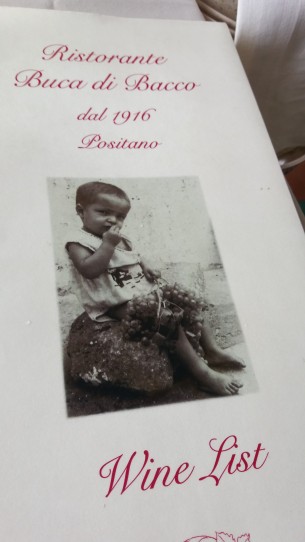
The WINE LIST
BUCA Di BACCO
Since 1916
POSITANO
.
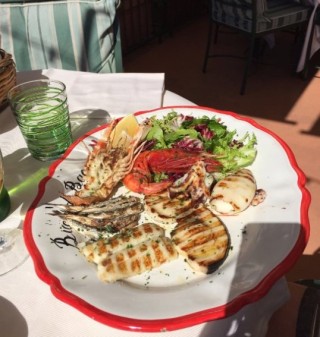
PESCE MISTI di Mare
BUCO di BACCO
POSITANO … I won’t give you the address, as you can’t miss it. The Hotel and Ristorante BUCA di BACCO is front and center, right at the main beach in the center of town in Positano. If by some insane reason you have a problem finding it, just ask, it’s right down near the water. telephone : 39 081 837 0723
PS … If you can Afford It? The Hotel is Wonderful.
Da VINCENZO
A Great View of POSITANO from a outdoor table at Da VINCENZO
That’s the terrazzo of Caffe Positano where all the people are sitting outside, which if you started going to Positano long ago, you may know that spot as the old BAR DeMARTINO, one of my favorite places ever in Positano, but sadly no longer there. Anyway, this is a spectacular spot to get an Aperitivo, have lunch or dinner, and just enjoy the moment and the beauty before you, and just how “Lucky” you are to be in this Gorgeous Place, known as Positano.
Enjoy!
.
Italian Cookbook Author (Me)
at Da VINCENZO
Been Going there Since 1985
Positano
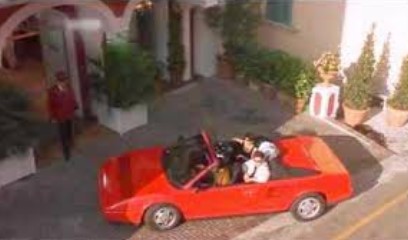
Yes, I started going to Da Vincenzo way back in 1985. Ever Since my first trip to the lovely little Seaside Town on The Amalfi Coast, that was yet to be discover by the masses all around the World. Yes, there were people who had heard about this gorgeous place, but not nearly as many as do now. Yes, Positano for the most part was still relatively un-known back then. That’s before Marisa Tomei and Robert Downey Jr. made the movie ONLY YOU that brought the town to the attention of so many more Millions of people then had ever even heard of the palce before. Anyway Cei la Vie.
Now back to Rene Ricard and myself and how I discovered and went to Da Vincenzo way back in the Summer of 1985 (Bar DeMartino also). It was just a few days befor my long awaited first trip to Italy, Spain, and the South of France when as I waas walking down 2nd Avenue one night I ran into my friend Alma who was with the Poet RENE RICARD. We were all chatting on the street when I emntioned my trip. When I said I was going to Rome, Venice, and positano, Rene got quite excited and told me the best places to go to in Rome, Venice and Positano. So besides all the info Rene gave me on Rome and Venice, he told me all about Positano and where to stay and where to eat which included going to Da Vincenzo where Rene told me I’d get the Best Plate of SPAGHETTI VONGOLE that Id’ ever have in my entire life.
La CAMBUSA
La CAMBUSA
.
View From a Table at La CAMBUSA
La CAMBUSA … Piazza A. Vespucci / Spiaggi Grande POSITANO … tel # 39 089 812051
.
Linguine Frutta di Mare , La CAMBUSA
La CAMBUSA
PIAZZA A. VESPUCCI
POSITANO
La CAMBUSA
Out of most of the places we went in Positano this was easily best. They are so friendly and the food was perfect while overlooking the beach. Our first night they were about to close and stayed open for us to get a light bite and a great bottle of wine and we told them we would be back and they didn’t not disappoint. The seafood pasta was amazing and once again the staff was accommodating. I couldn’t recommend this place more. Enjoy Positano and really get to know the people because it’s a great place.
.
.
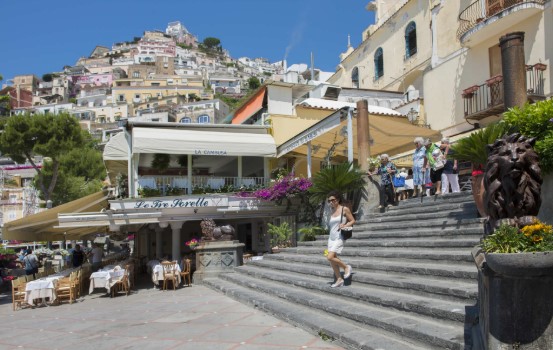
Le PERGOLA
La CAMBUSA
.
La CAMBUSA and The Piazza Amerigo Vespucci
POSITANO
POSITANO
HOTEL ROYAL
Via PASITEA 344, – POSITANO
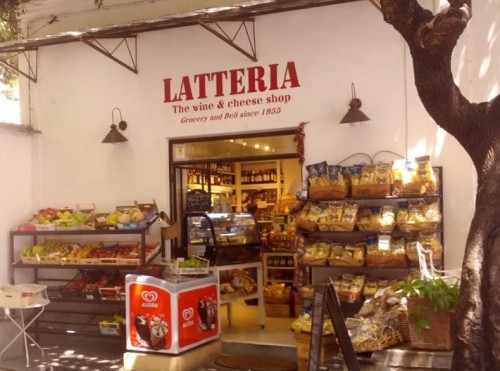
LATTERIA
“Alimentari” … Via Pasitea , POSITANO
LATTERRIA
“Some of The BEST FOOD in All of POSITANO”
.
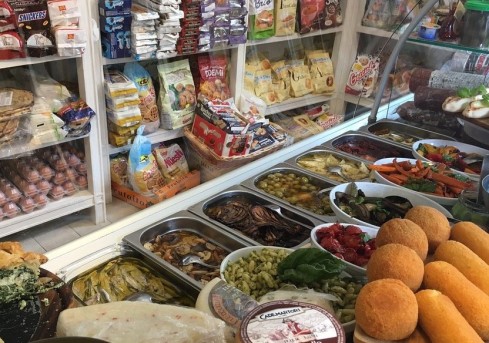
FRITTATA FORMAGGI ARANCINI PANINI MELANZANE SALUMI e FRUTTA
The Selection at “LATTERIA” is AMAZING
And You Can Take it out and Eat on Their Lovely Little Terrazzo
“I Did”
.
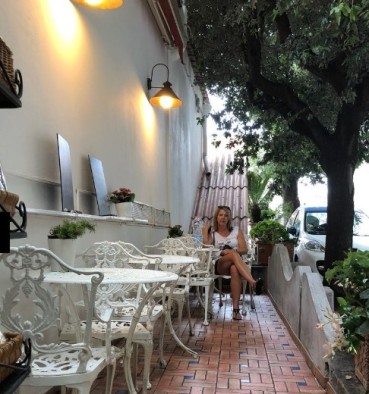
The Terrazzo at “LATTERIA ALIMENTARI”
We just lucked out and stumbled into this place for sandwiches while we waited for check in time at our hotel. We took them down to the beach and ate them on benches. Several people came up and asked where we got them! They were delicious and SO reasonably priced. Fantastic!
.
The GIRLS at Latteria Positano
.
.
Eat out on The Terrace or Take Out to Your Hotel Room or Apartment
or for Your BEACH LUNCH
They’ve got everything you need : Water, Wine, Sandwiches, Fruit, Rice Balls, Cheese, Salami, Eggplant Parmigiano, Frittata, Olives, Sweets, everything.
.
Daily Specials at LATTERIA POSITANO
The AMALFI COAST
ULTIMATE TRAVEL GUIDE
POSITANO The AMALFI COAST
TRAVEL GUIDE – COOKBOOK
POSITANO CAPRI NAPLES SORRENTO
DELIKATESSAN
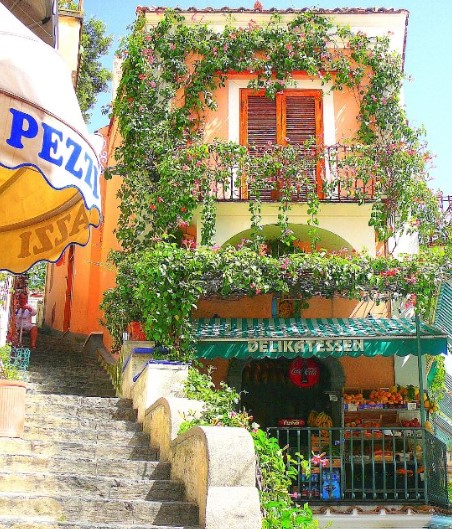
Delikatessan
Yes another deli (Salumeria). Believe it or not, Salumerias / Rosticerias have some of the best food in almost every city in Italy, and so is the case in Positano with Latteria Deli and here at Delikatessen. We decided to grab some food to take back some food to enjoy on our balcony. The food was of great quality and very reasonably priced. We bought some Pasta, Panini, and Eggplant, Arancini (Rice Balls) . Everything was super tasty. They make greay Sandwiches (Panini) that a great to take along with some Fruit and Arancini for an awesome Beach Lunch. If you are staying in Positano for a while and don’t want to eat out all the time then this is a great option. They have a great wine selection if you like to do as we do and keep a bottle or two back at our room , as well as fruit and bottled water which you always need.
.
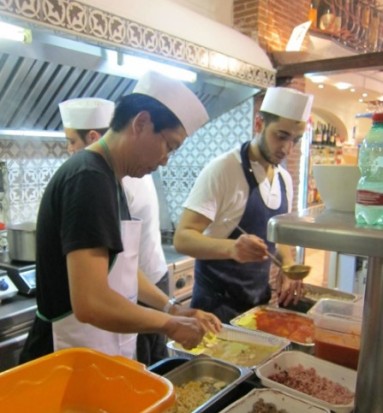
In The KITCHEN at DELIKATESSEN
POSITANO
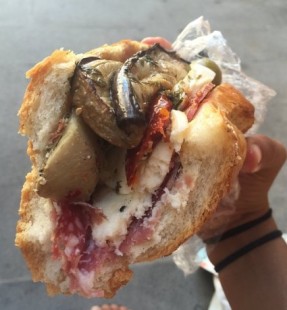
Look at This Awesome Panino
Eggplant, Salami, Mozzarella, Peppers
One of the Girls at DELICATESSEN
POSITANO
DEICATESSEN …. Via Mulini 5 , POSITANO
.
The BEACHES
.
View from Beach Club La SCOGLERE
at Music on The Rocks
POSITANO
“My own personal Favorite Beach in Positano”
ITALY
Arienzo Beach
POSITANO
Spiaggi Grande
The Main Beach of Positano
Fornillo Beach is a Great Spot with Several Nice Bars and Restaurants
POSITANO
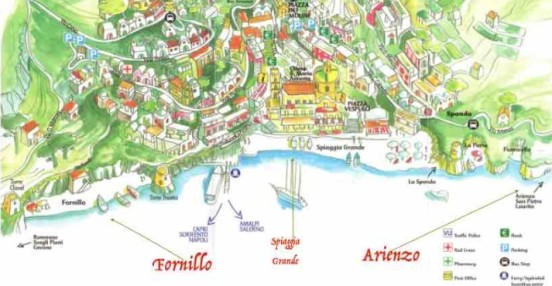
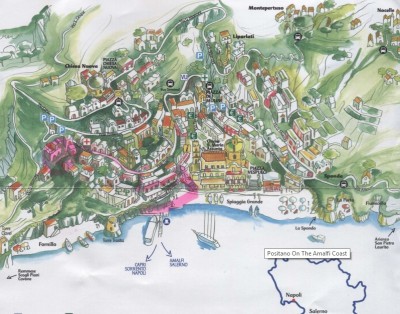
3D BEACH MAP
of POSITANO
The AMALFI COAST
The Boat to Da ALDOLFO
POSITANO
at LAURITO BEACH
ITALY
Map of Positano and its Beaches
.
POSITANO The AMALFI COAST
COOKBOOK / TRAVEL GUIDE
THINGS to DO ALL OVER ITALY !!!
The AMALFI COAST