theDannyReport
Italian Explorer Giovanni Verrazzano discovered New York Bay and The Island of Manhattan
GIOVANNI VERRAZZANO “The DISCOVERER of MANHATTAN ISLAND
& NEW YORK BAY”
Verrazzano was born in Val di Greve (now Greve in Chianti), south of Florence, the capital and main city of the Republic of Florence. Recent archival research indicates he was born on July 20, 1491 to Frosino di Lodovico di Cece da Verrazzano and Lisabetta di Leonardo Daffi. An older hypothesis identified him with a son born in 1485 to Piero Andrea di Bernardo da Verrazzano and Fiammetta Cappelli.
GIOVANNI VERRAZZONO VOYAGE 1522- 1524
DISCOVERS NEW YORK BAY
n September 1522, the surviving members of the Magellan expedition returned to Spain, having circumnavigated the globe. Competition in trade was becoming urgent, especially with Portugal.
French merchants and financiers urged King Francis I of France to establish new trade routes. In 1523, the king asked Verrazzano to explore on France’s behalf an area between Florida and Newfoundland, intending to find a sea route to the Pacific Ocean. The expedition was funded by a consortium of Florentine merchants based in Lyon and Rouen, including the Gondi, Rucellai, Nasi, and Albizzi families. Over 20,000 écus were raised, with Verrazzano himself contributing as both captain and investor.
Within months, four ships set sail due west for the Grand Banks of Newfoundland, but a violent storm and rough seas caused the loss of two ships. The remaining two damaged ships, La Dauphine and La Normande, were forced to return to Brittany.
Repairs were completed in the final weeks of 1523, and the ships set sail again. This time, the ships headed south toward calmer waters under hostile Spanish and Portuguese control.
After a stop in Madeira, complications forced La Normande back to home port, but Verrazzano’s ship La Dauphine departed on January 17, 1524, piloted by Antoine de Conflans, and headed once more for the North American continent.
It neared the area of Cape Fear on March 21, 1524 and, after a short stay, reached the Pamlico Sound lagoon of modern North Carolina. In a letter to Francis I, described by historians as the Cèllere Codex, Verrazzano wrote that he was convinced that the Sound was the beginning of the Pacific Ocean from which access could be gained to China.
Continuing to explore the coast further northwards, Verrazzano and his crew came into contact with Native Americans living on the coast. However, he did not notice the entrances to the Chesapeake Bay or the mouth of the Delaware River.
In New York Bay, he encountered the Lenape in about 30 Lenape canoes and observed what he deemed to be a large lake, really the entrance to the Hudson River. He then sailed along Long Island and entered Narragansett Bay, where he received a delegation of Wampanoag and Narragansett people.
The words “Norman villa” are found on the 1527 map by Visconte Maggiolo identifying the site. The historian Samuel Eliot Morison writes that “this occurs at Angouleme (New York) rather than Refugio (Newport). It was probably intended to compliment one of Verrazzano’s noble friends. There are several places called ‘Normanville’ in Normandy, France. The main one is located near Fécamp and another important one near Évreux, which would naturally be it. West of it, conjecturally on the Delaware or New Jersey coast, is a Longa Villa, which Verrazzano certainly named after François d’Orléans, duc de Longueville.”[27] He stayed there for two weeks and then moved northwards.
He discovered Cape Cod Bay, his claim being proved by a map of 1529 that clearly outlined Cape Cod. He named the cape after a general, calling it Pallavicino. He then followed the coast up to modern Maine, southeastern Nova Scotia, and Newfoundland, and he then returned to France by 8 July 1524. Verrazzano named the region that he explored Francesca in honour of the French king, but his brother’s map labelled it Nova Gallia (New France).
MAJOR POINTS
GIOVANNI VERRAZZANO was born in Greve in The Republic of Florence, modern day Grave in Chianti, Italy.
VOYAGE of 1524 – From 1522 – 1524, the Exploration of the East Coast of North America, from Florida to Newfoundland, Canada.
Landed at Cape Fear, Florida – March 21, 1524
1524 – Reaches the Chesapeake Bay near the mouth of the Delaware River
1524 – Sao;s into New York Bay and discovers Manhattan Island. Then explores Long Island, New York and discovers Narragansett Bay.
1527 – Second trans Atlantic Voyage to Brazil. Returns to Dieppe, France with a cargo of Brazil Wood.
3rd VOYAGE 1528 – After exploring Florida, The Bahamas, and the Lesser Antilles, Verrazzano anchorage of the Island of Guadalupe, and rowed ashore, where he was allegedly Killed and “Eaten” by the native Caribs.
, located in Greve in Chianti, is a historic Tuscan estate with roots dating to Roman times and documented winemaking since 1150. Famous as the birthplace of explorer Giovanni da Verrazzano (1485), the castle was held by his family until 1819. Owned by the Cappellini family since 1958, it is a renowned Chianti Classico producer focusing on Sangiovese and organic, sustainable farming.
Daniel Bellino Z – lunch at Villa Calcinaia with Conti Capponi – Greve in Chianti
The CONTI CAPPONI
The first time I was ever in Chianti was the most memorable. Yes, I’ve had many wonderful days in Chianti, but nothing like that first day. I was in the process of putting together my restaurant Bar Cichetti, and this was another exploratory trip. I didn’t have the wine connections that I would garner in later years, knowing so many Italian wine producers that I do these days.
Some friends set up two vineyard visits in Chianti Classico for me, my business partner, an associate of ours, and the lady Gilda who set up our meeting the Conti Capponi, and visiting the Capponi family estate – Villa Calcinaia in Greve. In the Capponi family, there are two brothers, Count Sebastaiano Capponi & his brother Nicolo. We were in Florence and had to meet Nicolo at their palazzo – Palazzo Capponi on the Arno River, just two feet from the Ponte Vecchio Bridge. Our friend Gilda is a good friend of the Capponi’s and she brought us to the Palazzo and introduced us to Conti Nicolo Capponi. When we met, I thought I was talking to Prince Charles. Nicolo was brought up with a British nanny and was educated in England, and thus when specching in English, he had an English accent. I was quite surprised when I met him. Anyway, we hopped in two cars, and drove down to Grave and the Cappoli Family wine estate – Villa Calcinaia in Greve. You take the ancient Roman road known as the Chiantigiana south out of Florence and into the heart of the Chianti Classico wine region.
We made a right, turning off the Chiantigiana road and onto the Capponi property. And just like you see in the movies, the drive leading to the Villa was tree lined on both sides of the road with majestic Cypress Trees. “Wow,” I was blown away. We arrived at the Villa, a sort of small castle, and it was lovely. The Capponi family has owned this property since 1524. The current structure of the Villa Calcinaia was built in the 1700s. Quite a place to be, and I was in awe. Nicolo took us inside. We entered the kitchen, which looked much the same as it did 300 years before. A lady was cooking at the fireplace. She was the family cook, and Nicolo introduced us to her. We chatted for a few minutes, and then Nicolo took us on a tour of the cellars. We left the kitchen and walked down a hallway, and as we approached one room, Nicolo said, “here we have Alibaba.” He was referring to the beautiful large terracotta vats that were filled with Olive Oil. Wow?
Then Nicolo said, “this is the Mother. It’s 300 years old.” Wow, again. The 300 year old mother is a starter to make vinegar. And it’s 300 years old.
Besides making wonderful Chianti wine, the Capponi family produces Tuscan Olive Oil, vinegar, Grappa, and Vin Santo wine.
Nicolo then took us to another room where white grapes were drying on racks. These grapes were for the Vin Santo, which must be dried before vinifying in order to make that “lush nectar,” that is Vin Santo (Holy Wine).
After seeing the grapes for the Vin Santo, Nicolo took us into the main cellar room where the family’s fine Chianti was aging in numerous large Slovenian Ok Casks. “Wow,” again. It made me feel amazing. Being there in the storied wine cellars of The Villa Calcinaia, in the heart of Chianti Classico. “Wow?”
Nicolo got a few glasses and opened a small spout on the cask, to draw some wine from. He then gave us each a glass, and we tasted the wine. “The Chianti.” It was marvelous, and so special, to do a barrel tasting of some Capponi Family Chianti. Quite remarkable.
Nicolo’s brother Sebastiano came into the seller, and that’s when we first met. Sebastiano has been running the winery since 1992. We met him that day in 1997, and I’ve known him ever since. He comes to New York often, to do tasting and attend Chianti events in New York, and do business promoting and selling his family;s wine. And me being in the Italian restaurant business for many years, I’ve spent time drinking wine and breaking bread with Sebastiano. His brother Nicolo is a writer and scholar, and not that involved in the wine business, as Sebastaino. I’ve never seen Nicolo in New York, though Sebastiano, I have many times over the years, and it is always a great pleasure to see him.
From the cellars, Nicolo took us outside to show us the gardens and vineyards. Quite beautiful. The to the Grand Finale of the day.
Nicolo took us to the dining room, where we were going to have lunch with the Conti Capponi brothers Sebastiano & Nicolo Capponi. Wow, can you believe that? Me Danie Bellino, dining with two Counts of one of Florence’s oldest and most noble families, The Capponi’s of Florence, Italy. And at the wine estate in Greve, Chianti Classico, Italy. How did I ever get here? Well it was a lot of hard work, and long hours working and educating myself, that found me here, having lunch with The Conti Capponi, at Villa Calcinaia, breaking bread, and drinking their Chianti, with two aristocratic, noble gentleman Conti Sebastiano Capponi and his brother Nicolo, Gilda, Maron, and Tom.
The meal was simple, and delicious. We had Tuscan Pecorino, Salami, bread, and olives for antipasto. So good. There’s nothing like tasty Italian Cheese and local Salami. Drinking Capponi family wine (Chianti) with the Capponi’s themselves, inside an ancient dining room in the Villa Calcainaia. I dipped my bread into the lush Olive Oil. This olive oil is some of the World’s finest. Yes it sounds cliche, but “It doesn’t get any better than this.” Not by a long shot. The antipasto was so good, I can still taste the Pecorino and Salami today, just thinking about it.
The antipasto was followed by a simple Pici Pomodoro, fresh homemade pasta in a tasty tomato sauce. We drank more Chianti. I was in “7th Heaven.” This was one of the most memorable days in my entire life. And still, almost 30 years later in 2025.
For the main course, we had roast chicken that we had watched the cook begin to cook over an open fire in the old kitchen. The chicken was served with roast potatoes. We kept drinking Chianti.
The Grand Finale of the meal was the Capponi’s Vin Santo, served with Biscotti. What can I say about Vin Santo? It was like putting the cherry on top as they say. We had the most wonderful meal, but if that wasn’t enough, one more wonderful thing was added. The Vin Santo. Vin Santo is a special wine of Tuscany. It is made in limited production. It is a lush flavorful wine, with a taste of apricots, hazelnuts, dried fruit, and caramel. It is brought out to drink on special occasions, and this was one. Having opened America’s 1st Venetian Wine Bar – Bar Cichetti, for doing so, I became a darling of the Italian Wine World. When we first opened Bar Cichetti, all the Italians coming to New York wanted to meet me for what I was doing. I had a love and passion for wine, as well as good knowledge, which grew year by year. And year by year, I made more and more relationships with Italian wine people. Estate owners and winemakers, and those prominent in the World of Italian Wine. I’ve been invited to many special Italian Wine Dinners, luncheons, tasting, and events. I’ve visited many wine estates all over Italy, and have become friends with the owners, and their families. And to this day, though I have had so many special times, till this day, none tops my first Italian Wine experience in Italy, meeting and having lunch with the Conti Capponi. “A very special day.”
Basta!
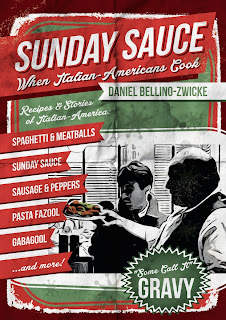
Excerpted from ITALIAN FOOD & TRAVELS
Daniel Bellino Zwicke – Amazon.com
Back in Sicily – A Celebration with author Daniel Bellino
At the Teatro Greco
Siracusa, Sicily 2017

Posted this on Facebook 2017
Celebrating the 1 year anniversary of successful major surgery July 5, 2016
My Favorite Place to Eat in Palermo
Antica Focacceria San Francesco
View from my hotel Window
Alia / Roccapalumbo, Sicily
Hanging with Francesco and Giuseppe
Caffe Glamour, Lercara Friddi
SICILY

My Grandparents Church
The DUOMO, Lercara Friddi

My Hotel on Ortigia
Domus Mariae Hotel
Siracusa, Sicily

View from my hotel balcony at Domus Mariae
The Isle of Ortigia

The Cathedral of Siracusa
It was built over a Greek Temple of Athena. dating back to the 5th Century BC (before Christ).You can see the Greek Columns left from the Greek Temple that the Cathedral (Duomo) was built upon. The Cathedral has several different architectural styles to it. The Cathedral di Siracusa was constructed in the 7th Century under Saint Bishop Zosimo. The building was converted to a Mosque in 878 under Moorish Rule, but was converted back to a church under Norman Rule when Roger I retook the city in 1085. The beautiful present day facade was built between the years of 1725 – 1753 and is classified as High Sicilian Baroque. It’s absolutely Gorgeous. As of 2015 the Cathedral holds a number of relics of Saint Lucy, the Patroniss of the city of Siracusa. The relics include; a robe, a number of bone fragments, a veil, and a pair of Saint Lucy’s shoes. The Cathedral shares the large Piazza with the Church of Santa Lucia Badia, a short walk to the south of the piazza. The Church of Santa Lucia Badia possess’s a monumental painting by Caravaggio painting of the Burial of Saint Lucy. I’ve been in many churches and Cathedrals all over the World. The Cathedral di Siracusa is one of the most beautiful of all.

SANTA LUCIA BADIA

The Church of Santa Lucia Badia, Ortigia, Siracusa
SICILY

CARAVAGGIO
“The BURIAL of SANTA LUCIA”
The Church of Santa Lucia Badia
According to The Golden Legend, Saint Lucy had bestowed her wealth on the poor, in gratitude for the miraculous healing of her mother. Denounced as a Christian by her own suitor who wrongly suspected her of infidelity, she refused to recant, offered her chastity to Christ, and was sentenced to be dragged to a brothel. Miraculously, nothing could move her or displace her from the spot where she stood. She was pierced by a knife in the throat and, where she fell, the church of Santa Lucia al Sepolcro in Syracuse was built.
Caravaggio had escaped from prison on Malta in 1608, fleeing to Syracuse. There his Roman companion Mario Minniti helped him get a commission for the present altarpiece. Caravaggio painted it in 1608, for the Franciscan church of Santa Lucia al Sepolcro. The choice of subject was driven by the fact that St. Lucy was the patron saint of Syracuse and had been interred below the church. The subject was unusual, but especially important to the local authorities, who were eager to reinforce the local cult of St. Lucy, which had sustained a setback with the theft of her remains during the Middle Ages

A Church in AGRIGENTO


The Chiesa del Purgatorio, Agrigento, Piazza d’ Purgatorio. the statues, the work of Giuseppe and Giacomo Serpotta, represent the virtues: love, simplicity, charity, prudence, justice, religion, fortitude, meekness . Also noteworthy are the two seventeenth-century confessionals and the marble statue of the Madonna della Melograna, attributed to the Gagini school. Finally, the Chapel of the Crucifix is splendid, covered with pure gold, the work of the sculptor Pietro Carletto.
Recipes from My SICILIAN NONNA
SINATRA SAUCE
.
Anthony Bourdain – Disappearing Manhattan New York Restaurants Bars Old School NYC Businesses
KEEN’S STEAKHOUSE
NEW YORK NY
VANISHING MANHATTAN
Manganaro’s Grosseria Italiana, commonly referred to as Manganaro’s, was an Italian market and deli on Ninth Avenue in the Hell’s Kitchen neighborhood of Manhattan, New York City. It opened in 1893 and operated for 119 years, helping to introduce the hero sandwich to Americans. The family closed the business and put the property up for sale in 2012.
The business was founded in 1893 by Ernest Petrucci as a wine and spirits store, Petrucci’s Wines & Brandies, that also sold groceries. Its location at 488 Ninth Avenue near 37th Street was on a stretch of the avenue that remained lined with exotic food stores for decades. After the enactment of Prohibition in the U.S. in 1919, Petrucci’s nephew James Manganaro, an immigrant from Naples, took over the store in the 1920s and changed the name; in 1927 he was able to buy the building. Manganaro may have invented the hero sandwich, and played a role in introducing it to Americans.
On his death in 1953, Manganaro’s passed to his brother Louis and sister Nina Manganaro Dell’Orto and their spouses; in 1955, with a publicity agent’s help, they invented the six-foot “Hero-Boy” sandwich, which was successful enough for one of Dell’Orto’s four sons to go on the original version of the TV quiz show I’ve Got a Secret, and for the family to open a sandwich shop next door at 492–494 Ninth Avenue the following year, while continuing to operate a deli and lunch counter in the rear of the grocery store.
In 1962, Louis Manganaro retired and two of his four nephews took over the grocery store and the other two the sandwich shop, Manganaro’s Hero-Boy, and the businesses were separated.
Sal Dell’Orto, who bought out his brother’s half ownership of the grocery store, and James Dell’Orto, who bought out his brother’s half ownership of the sandwich shop, fell out over rights to the “Manganaro’s Hero-Boy” name, trademarked by the sandwich shop in 1969, and advertising for party sandwich telephone hotlines, which led to two separate court cases. The business’ neon sign installed in the early 1930s, which became blinking in the 1960s, was turned off in 2000 so that Manganaro’s Hero-Boy could not benefit from it.The grocery store was repeatedly found at fault over the hotline and was ordered to pay damages to the sandwich shop, and the financial drain plus waning popularity, some of it due to the declining neighborhood, led to the decision to sell the building and close. This was first announced early in 2011, but the building was withdrawn from the market; the business then closed in late February 2012.
Anthony Bourdain featured the store, on the episode title “Disappering Manhattan” on No Reservations TV Show.
Lanza’s was an Italian restaurant in the East Village, Manhattan. It was opened in 1904 by Sicilian immigrant Michael Lanza in a tenement built in 1871. Lanza was rumored to have been a chef for Victor Emmanuel III of Italy. They closed in 2015. Eater reported it officially closed in 2017 after seizure by a marshal for non-payment of taxes. It is also said to have closed in 2016. The former restaurant’s murals, stained glass, and sign were retained by Joe and Pat’s, a pizzeria that opened at the location in 2018.
They were known to be a favorite of Lucky Luciano, Carmine “Lilo” Galante and Joseph “Socks” Lanza.
Good Friends and Chianti Italian Wine
Chianti – Bellino on Vino
HOTELS in TUSCANY
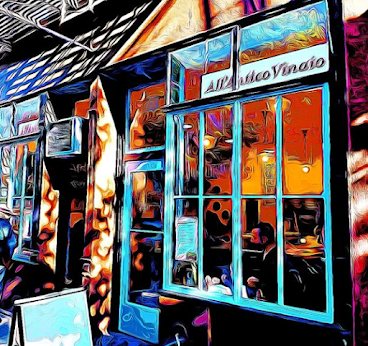
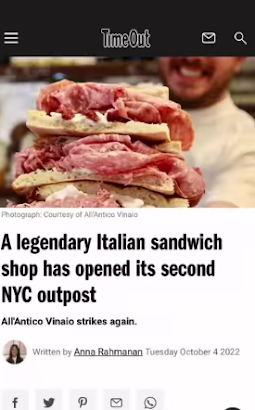
Antico Vinaio Opens Italian Sandwich Shop Greenwich Village New York NYC
NYC
Amy Winehouse
HOT SAUCE – TABASCO
SECRET RECIPES
SECRET KFC Kentucky Fried Chicken Recipe
SHAKE SHACK Burger Recipe
RECIPES USING HOT SAUCE
and Much Much More ….